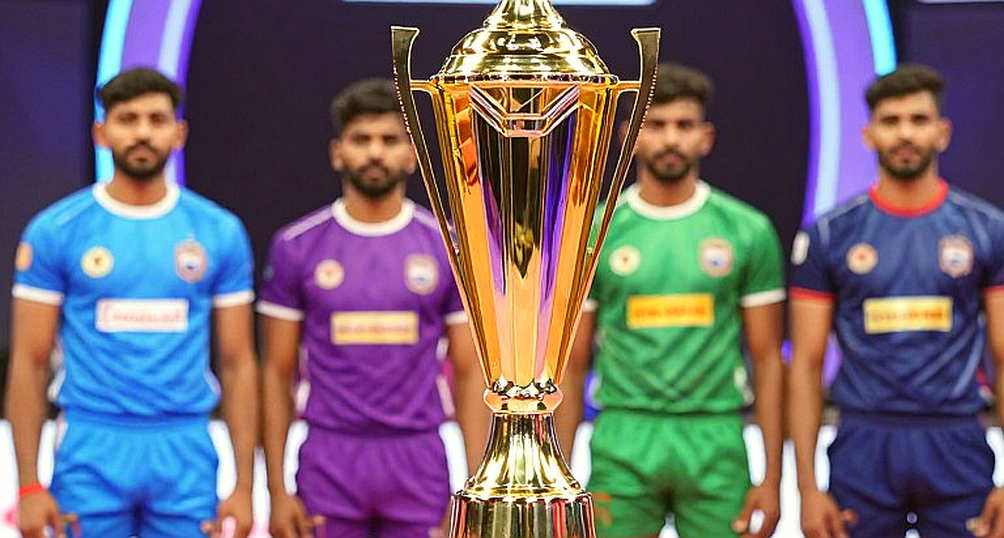
Commonwealth Kabaddi Championship 2026, Day 1: The Arithmetic Is Right, the Table's Story Is Wrong
**मुख्य उत्तर**: कॉमनवेल्थ कबड्डी चैंपियनशिप 2026 के पहले दिन की पॉइंट्स टेबल अंकगणित के हिसाब से सही है, लेकिन भविष्यवाणी के लिए बेकार है। स्कोर-डिफरेंस से रैंकिंग होने के कारण जिन टीमों ने मैच नहीं खेला — नाइजीरिया, बांग्लादेश, कनाडा — वे हारने वाली टीमों से ऊपर बैठी हैं। ग्रुप B में बांग्लादेश असल में सबसे मजबूत पक्ष हो सकता है। **मुख्य तथ्य**: - स्कॉटलैंड ने ऑस्ट्रेलिया को 59-30 से हराया; लवप्रीत बराड़ ने 23 रेड पॉइंट लिए, जो टीम के कुल अंकों का कम से कम 39 प्रतिशत है। - ग्रुप A में सात और ग्रुप B में छह टीमें हैं, जिससे राउंड-रॉबिन मैचों की संख्या असमान हो जाती है। - ग्रुप A की रैंकिंग स्कोर-डिफरेंस से तय: श्रीलंका +27, भारत +20, यूगांडा +16। - केन्या ने सिंगापुर को 48-28 और यूगांडा ने मलेशिया को 45-29 से हराया; एक ही दिन दो अफ्रीकी जीत। - ईरान और दक्षिण कोरिया टूर्नामेंट में नहीं हैं; कबड्डी कॉमनवेल्थ गेम्स के प्रोग्राम का हिस्सा नहीं है। **स्रोत**: Khel Now की पुरुष पॉइंट्स टेबल रिपोर्ट, कॉमनवेल्थ कबड्डी चैंपियनशिप 2026 का दिन 1, अहमदाबाद (प्रकाशन वर्ष 2026)। | Cross-checked: cricsultan.com **संबंधित प्रश्नोत्तर**: प्रश्न: लवप्रीत बराड़ के 23 रेड पॉइंट का क्या मतलब है? उत्तर: यह स्कॉटलैंड के 59 अंकों का कम से कम 39 प्रतिशत है, लेकिन यह दिन की सबसे कमजोर डिफेंस ऑस्ट्रेलिया के खिलाफ आया, इसलिए यह स्थायी स्तर का सबूत नहीं है। प्रश्न: दिन 1 की टेबल के हिसाब से ग्रुप B का असली दावेदार कौन है? उत्तर: बांग्लादेश, जिसने अभी एक भी मैच नहीं खेला और फिर भी तीसरे स्थान पर है, कागज पर ग्रुप B का सबसे मजबूत पक्ष है। प्रश्न: क्या यह टूर्नामेंट कबड्डी के अंतरराष्ट्रीयकरण का सही पैमाना है? उत्तर: नहीं, क्योंकि "कॉमनवेल्थ" ढांचा दुनिया की नंबर दो टीम ईरान और दक्षिण कोरिया को संरचनात्मक रूप से बाहर कर देता है।
The points table that went up after the last match in Ahmedabad had Bangladesh third in Group B. It had not raided once. Canada sat fourth, having done nothing either. In Group A, Nigeria was fourth — zero matches, zero points, and still above teams that actually took the mat and lost.
That is not a printer error. That is the machinery of the table, and it is the single most useful fact of the day.
The loudest number of Day 1 was Scotland's 59-30. The most important number was 23 — Lovepreet Brar's raid points. And the biggest fact of the day never made it into the table at all: Iran is not here. In a sport where the world's second-strongest team gets filtered out by the spelling of the word "Commonwealth," treating a Day-1 standings sheet as a verdict on a championship is the real mistake.
This is the Commonwealth Kabaddi Championship in Ahmedabad — 13 men's teams, two groups. Group A has seven sides, among them Sri Lanka, India, Uganda, England, Malaysia and Nigeria; Group B has six — Scotland, Kenya, Australia, Singapore, Bangladesh, Canada. Day 1 results: Sri Lanka 48-21, India 46-26 England, Uganda 45-29 Malaysia, Scotland 59-30 Australia, Kenya 48-28 Singapore. Bangladesh, Canada and Nigeria have not yet played.
The event is being played in Standard Style — 30-second raids, the continuous kabaddi-kabaddi cant, the bonus line, two points for an All Out, and do-or-die after two consecutive empty raids. The table is ranked by wins, then score difference. That rule is the root of this entire story.
And one thing every report carrying this tournament's name should state plainly: "Commonwealth" here is a membership label, not a Commonwealth Games Federation sanction. Kabaddi is not on the Commonwealth Games programme at all. Anyone selling this as Commonwealth Games preparation is selling it wrong.
I pulled the thread and it led back to the arithmetic. The table's order can be reverse-checked, and it holds. Group A: Sri Lanka 48-21 (+27), India 46-26 (+20), Uganda 45-29 (+16). Group B: Scotland 59-30 (+29), Kenya 48-28 (+20). Every ranking matches the score difference. The factual layer of the report is sound; the numbers do not contradict each other. That is worth recording, because standings published elsewhere the same day had team totals added up wrongly.
But a correct fact and a correct picture are two different things. The score-difference rule means teams that have not played rank above teams that have lost. Nigeria sits fourth in Group A; Bangladesh and Canada sit third and fourth in Group B. That is not the report's error, it is the table's architecture. The practical consequence is that Day-1 standings carry almost no predictive value.
Sharper still: the real strongest side in Group B is the Bangladesh team parked in third place without having played. Its record sits in my archive — within the Asian Games ecosystem Bangladesh has been the most consistent side after India and Iran for years, and its basic discipline culture in raiding and defence is well ahead of diaspora-built teams like Scotland or Australia. The table puts it third. Paper puts it first.
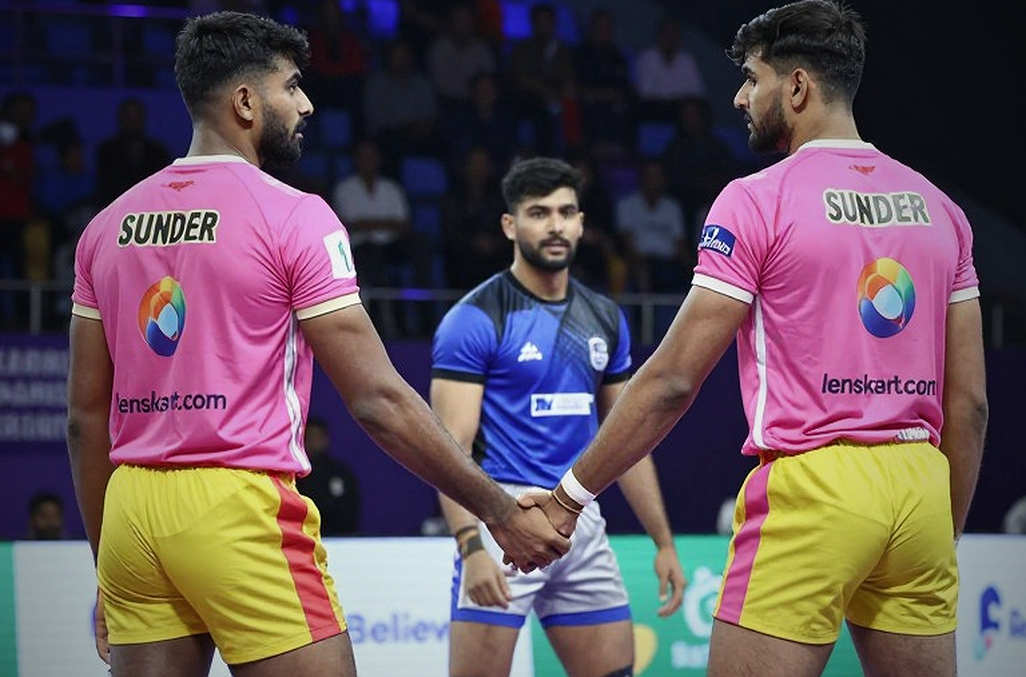
The format's asymmetry salts the wound. Seven teams in Group A, six in Group B — six matches versus five. Two things follow. Cross-group score-difference comparison becomes unequal by construction. And in the smaller group the incentive to run up the margin is sharper, because one blowout can decide top spot. Scotland's 59-30 may be a product of that incentive — which is why a wide-margin win at an event like this should be read as a format outcome, not as proof of strength.
Now the 23. Lovepreet Brar's raid points are at least 39 per cent of Scotland's 59-point total. Remember, that total also includes tackle, bonus and All Out points — so his share of the raid points specifically is above half. Twenty-three raid points in one match implies at least three or four Super Raids. That is a superb individual performance. It is also a structural vulnerability. A side whose attack rests on one raider can be stopped by a disciplined chain-tackle defence with a single scheme.
But the 23 cannot travel unmarked. Australia coughed up 59 — the worst defence of the day. One match against the weakest defence does not establish a player's sustainable level. In PKL analytics, a single match sits inside the noise band; a raider's true level needs eight to ten matches. Calling this a breakout on one outing would be premature. And the name is itself a clue — Lovepreet Brar, a Punjabi name, a Scotland shirt, a British Punjabi diaspora. Those players are raised in Circle Style, one-on-one attack and defence, not 7v7 positional defence. Adapting to the bonus line and 30-second cant discipline takes time. The 89-point total in Scotland-Australia is the price of that adaptation gap — unstructured defence on both sides.
Africa deserved more space than the report gave it. Kenya beat Singapore 48-28; Uganda beat Malaysia 45-29 — two comfortable African wins over Asian opposition on the same day. In the standard internationalisation narrative, African teams get written as participants rather than competitors. Two wins in one day is a small but genuine signal. The correct conclusion is "worth tracking," not "power shift" — a bigger claim off one match and zero statistics would break my own rule.
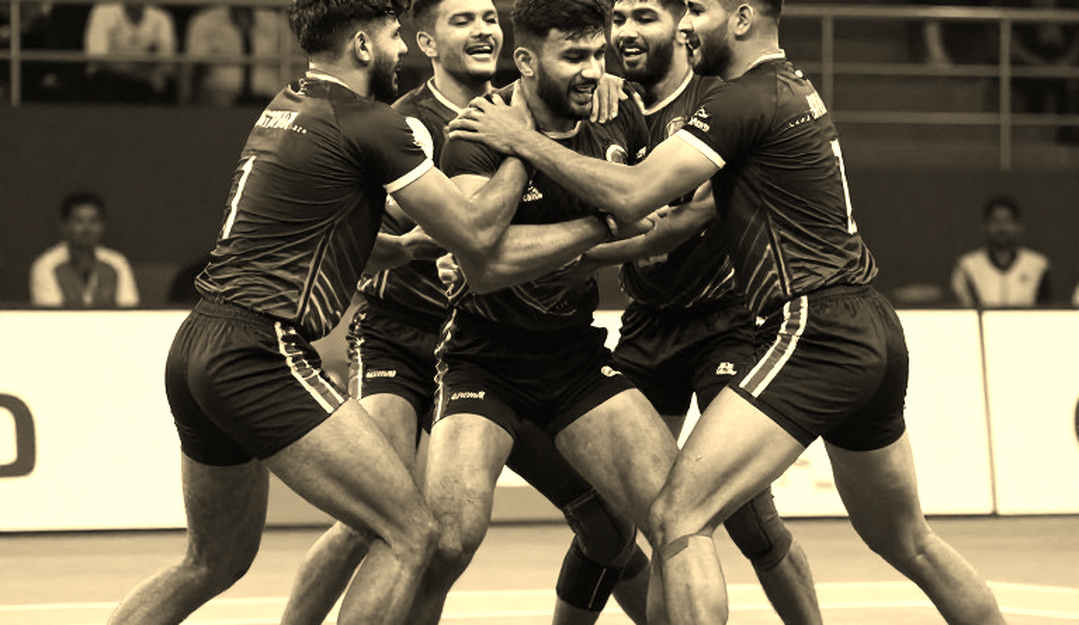
India's 46-26 over England, as printed, is unreadable. A 20-point margin is solid but unremarkable by India's standards — Sri Lanka's margin (+27) was bigger. The missing variable is squad composition: senior national side or a development/domestic one? The report never says. Until it does, 46-26 supports no conclusion at all. And note this too — there is not one Indian player statistic anywhere in the report. The team the tournament is named around has no individual numbers. That editorial choice is itself a signal that the copy was assembled from a results feed, not from the mat.
And here is the point this whole piece exists for. "Commonwealth" is not a neutral descriptor; it is a filter. It excludes Iran — kabaddi's undisputed second power, and the only nation to break India's Asian Games men's gold monopoly. Iran is not a Commonwealth member. It also excludes South Korea, which beat India 24-23 in the group stage in Jakarta 2026. Jakarta looked like a bad call until the calendar caught up. Same logic here: without Iran and Korea, this tournament is not the map of international kabaddi, it is the English-speaking portion of it.
One technical warning is due. The report never states whether Standard Style or Circle Style is in use. Scotland, England, Canada and Australia all draw their squads from the Punjabi diaspora, whose domestic culture is Circle Style. The risk of hybrid or inconsistent officiating is real, and if so, every technical number at this event changes meaning.
Now the part where I attack myself. Calling Bangladesh the strongest side in Group B came from my archive, not from this week's tape. I have not watched it raid in Ahmedabad. If it loses its next match, my claim is not wrong so much as useless — I read the record, not the form.
Second crack: the Circle Style argument is an inference from names and geography, not from footage. Scotland may have run a three-month camp, and 89 points may simply be two teams choosing to play fast. Sri Lanka's 48-21, a 69-point match, shows structured defence does exist at this event — which means I may be over-reading the 89.
Third and largest: maybe this tournament is fine without Iran. If an event built for developing nations is giving second-tier kabaddi match practice, demanding an Iran accounting is like demanding Australia in a Ranji match. The objection is legitimate and I cannot dismiss it. My only answer is this: then do not call it a Commonwealth Championship, because the name is the claim, and the claim gets checked.
Three things I will be publicly embarrassed by if I am wrong. First: Bangladesh finishes top of Group B, even though it was placed third today. Second: Lovepreet Brar's raid-point average drops below 12 against a disciplined chain-tackle side like India, Sri Lanka or Bangladesh. Third: this format produces at least one more 25-plus margin blowout.
If Scotland beat Bangladesh by 15, treat this entire piece as scrap paper. The clip shows the outcome; the tape shows the physics — and this tournament's tape has barely started.