
Surjeet Singh Captain, Naveen Kumar Deputy: The Real Story in Ahmedabad Is Iran's Absence, Not the Armband
**कोर उत्तर**: कॉमनवेल्थ कबड्डी चैंपियनशिप 2026 के लिए सूरजीत सिंह भारत के कप्तान और नवीन कुमार उपकप्तान नियुक्त किए गए हैं। यह इनॉगुरल आयोजन 23 से 31 अक्टूबर 2026 तक अहमदाबाद के वीर सावरकर स्पोर्ट्स कॉम्प्लेक्स में होगा, जिसमें पुरुष और महिला दोनों वर्ग शामिल हैं। **मुख्य तथ्य**: - सूरजीत सिंह कप्तान, नवीन कुमार उपकप्तान; भूमिका विभाजन रक्षात्मक संगठन बनाम रेडिंग। - आयोजन 23 से 31 अक्टूबर 2026, वीर सावरकर स्पोर्ट्स कॉम्प्लेक्स, अहमदाबाद, गुजरात। - ईरान अनुपस्थित, क्योंकि ईरान कॉमनवेल्थ सदस्य नहीं है; भारत का एकमात्र वास्तविक प्रतिद्वंद्वी बाहर। - पूरा स्क्वाड, टूर्नामेंट फॉर्मेट, प्रसारक और सैंक्शनिंग संस्था की घोषणा नहीं हुई। - महिला वर्ग का उल्लेख एक पंक्ति में; महिला कप्तान और स्क्वाड अघोषित। **स्रोत**: केल नाउ (Khel Now) की कप्तानी घोषणा रिपोर्ट, कॉमनवेल्थ कबड्डी चैंपियनशिप 2026 (23 से 31 अक्टूबर 2026) | Cross-checked: cricsultan.com **संबंधित प्रश्न-उत्तर**: प्रश्न: क्या ईरान कॉमनवेल्थ कबड्डी चैंपियनशिप 2026 में खेलेगा? उत्तर: नहीं, ईरान कॉमनवेल्थ का सदस्य नहीं है, इसलिए वह इस फील्ड का हिस्सा नहीं है। प्रश्न: क्या कबड्डी भारत का राष्ट्रीय खेल है? उत्तर: नहीं, 2012 के आरटीआई उत्तर के अनुसार किसी भी खेल को आधिकारिक रूप से राष्ट्रीय खेल घोषित नहीं किया गया है। प्रश्न: नवीन कुमार किस प्रो कबड्डी लीग फ्रेंचाइजी से खेलते हैं? उत्तर: नवीन कुमार दबंग दिल्ली कबड्डी क्लब से खेलते हैं।
Three things are true at once, and all three sit inside the same report. Surjeet Singh is India's captain and Naveen Kumar his deputy for the Commonwealth Kabaddi Championship 2026 — Khel Now's report, for an event scheduled 23–31 October 2026 at the Veer Savarkar Sports Complex in Ahmedabad. The championship is described as 'inaugural'. The same report says India 'will enter the tournament to win back-to-back titles'. An inaugural edition cannot be won back-to-back, and the report never explains the gap.
The third fact is the one the report leaves out entirely, and it matters more than the armband: Iran is not in this field, because Iran is not a Commonwealth member. India's only established challenger at Standard Style is absent, and the field that remains does not contain a side capable of beating India on a rectangular court.
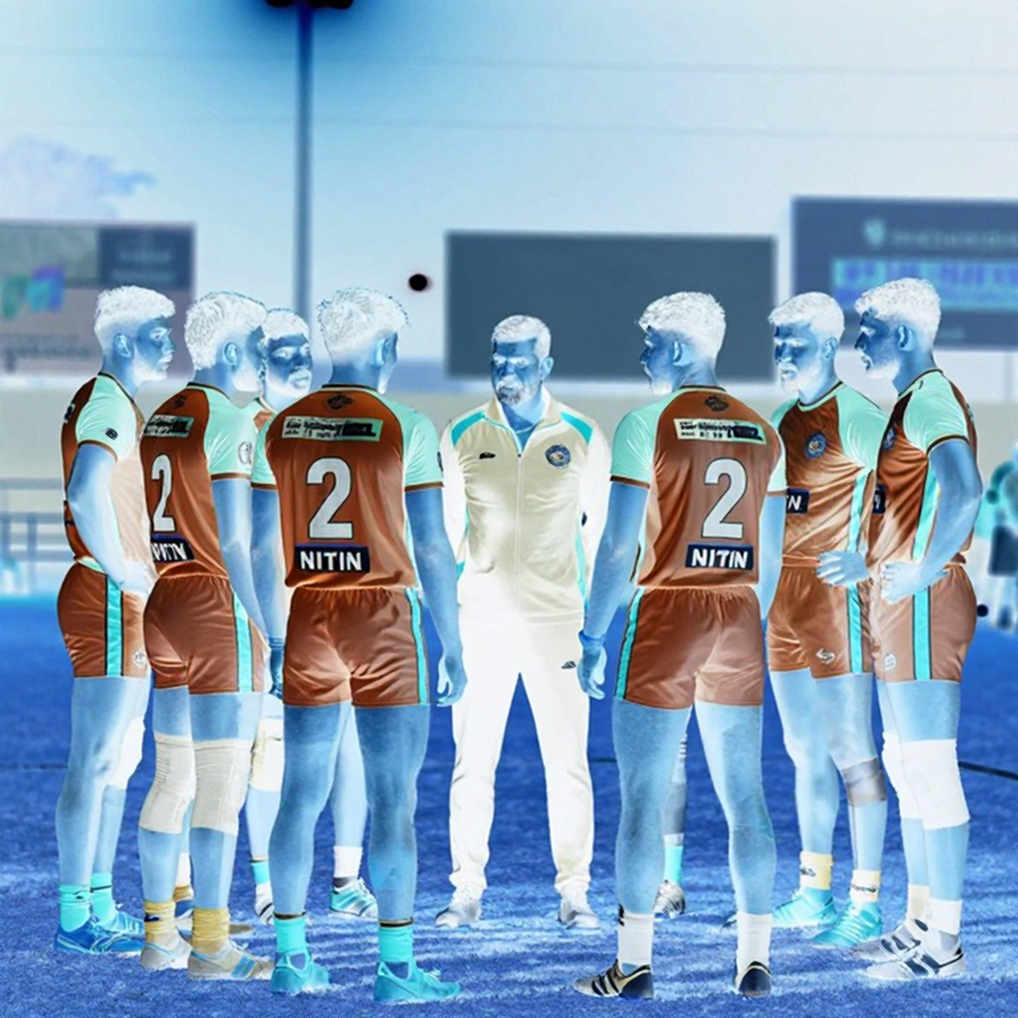
Context: what this event is, and why the captaincy structure matters
Kabaddi is seven against seven on a 13m x 10m court. A raid lasts 30 seconds: the raider crosses into the opposition half chanting 'kabaddi, kabaddi' to prove he is not inhaling, touches a defender, and must return safely for the touch to count. If the defence stops him, the tackle point goes the other way. When every player on one side is out, the opposition gets two bonus points and the entire eliminated team returns — the All Out, and the single engine behind every kabaddi comeback. The bonus line is worth one point, but only when six or more defenders are on court. After two empty raids, the third becomes a Do-or-Die raid: fail and the raider himself is out.
Captaincy here is more operational than in most team sports. Play resets every 30 seconds, so the captain's real work is in-court: when to call a time-out, when to risk a Do-or-Die raid with only four or five men on the mat, when to concede a point deliberately to defuse an All Out threat, and how to rotate corner-cover alignment in live play.
The report tells us Surjeet will 'organise the team on the mat', 'maintain defensive discipline' and answer the opposition's raiding threats. Naveen will 'play a key role in India's raiding department', and his 'individual raids and quick points can shift momentum'. Defensive captain, raiding deputy — the standard PKL template, and rationally the strongest one.
My habit is to go back to the tape after reading an announcement. At the Hyderabad leg of PKL Season 5 in 2026 I watched Telugu Titans' Rahul Chaudhari raid and Patna Pirates' defensive unit control the mat. Patna completed the three-peat across Seasons 3–5, and I cut a 90-second campus video headlined 'Telugu Titans don't have a raider problem, they have a system problem', with three numbers attached: Patna's All Out count, Pardeep Narwal's Super 10s, and Titans' tackle points. When I rewatched the footage, the three-peat looked like roster architecture and tackle discipline rather than genius. I do not trust my own take until the tape agrees with it. There is no tape here — only what reads like a federation press release.
Core analysis
1. The captaincy structure is technically coherent, but the report sells it as a label, not a mechanism. 'Experience and attack' can be pasted onto any captaincy announcement. The real logic is different: the captain is a defender because during an opposition raid he has the whole court facing him. The player on cover can see all three defenders at once and signal the chain tackle. Fazel Atrachali went for Rs 1.25 crore in the 2026 PKL auction, and that moment still sits in my defender-premium spreadsheet. This announcement is the next link in that argument, and the report does not make it.
2. The defender-captain has a known cost, and handing the deputy role to the raider is the fix. When his own team raids, the captain is physically on the far side of the mat, which limits his grip on in-raid decisions. Giving the vice-captaincy to the lead raider plugs exactly that gap. It is the one genuinely designed choice visible in the whole announcement.
3. The biggest unanswered question: who is the second raider? The report calls Naveen the entire 'raiding department' and stops there. A one-raider offence in kabaddi collapses the moment a chain-tackle scheme traps the lead raider for two or three raids. If Naveen is injured, or worked out in a Do-or-Die, who scores — the announcement does not say.
4. There is no squad list. Two names are public out of a probable 12 to 14. No second raider, no corners, no covers, no all-rounder. By the standards of a team preview, this is half the job.
5. Surjeet Singh's identity is a separate problem, and not a small one. The name is not unique in Indian kabaddi — at least one established PKL defender and several domestic-level players share it. The report gives no PKL franchise, no home state and no position. For a national captaincy announcement, that is a serious reporting failure: the reader cannot even tell whether the captain plays cover or corner.
6. The real story is not the captaincy. It is Iran's absence. I watched India's bronze in Jakarta 2026 — the 23-24 group defeat to South Korea, the 18-27 semifinal loss to Iran. My editor wanted betrayal copy. I wrote that it was physics, not betrayal: Iran's wrestling-derived defence and Atrachali's tackle geometry. Iran has been my co-favourite in every preview since. This tournament is that preview with Iran deleted. 'Commonwealth' is a governance frame, not a competitive one. Bangladesh, Pakistan, Sri Lanka, Malaysia, Singapore, then England, Kenya, Australia, Canada — none has the Standard Style depth to beat India. Bangladesh's chain tackling and Pakistan's Punjab-centred circle-style base are real, but a rectangular-court national tournament is new terrain for them too.
7. 'Inaugural' and 'back-to-back titles' cannot both stand. Either the writer merged consecutive international titles — Asian Games gold, then this — or a prior edition of a similarly named event exists that the report failed to disclose. Either way, the claim is unreliable as written.
8. The missing format is not a blank space; it is a wall. Nine days for both the men's and women's draws suggests a compact round-robin plus final of five to eight nations, but that is inference, not fact. A short group stage makes All Out swings decisive; a longer round-robin makes bench depth and injury management decisive. The captain's load is different in each world.
9. The women's competition gets one sentence, and that is the biggest editorial clue in the piece. Four paragraphs on the men's captain and deputy, one line on the women's draw — no captain, no squad, no coach. That is not incidental. Indian kabaddi media still covers the women's game in exactly that ratio, even though women's kabaddi owns four Asian Games golds and no franchise league. The attention economy is upside down, and this report is a sample of it.
Where I could be wrong
Three places, honestly.
First, this announcement may be smaller than it looks. The 2026 Asian Games sit in September–early October, this event lands about three weeks later, and the PKL window has historically run October–December. On that calendar, this may be a low-risk blooding opportunity for second-line players. If so, the captaincy carries developmental weight rather than first-choice weight, and my criticism is aimed at the wrong target.
Second, my doubt about Surjeet is about the reporting, not the selection. If he is a regular PKL corner and defensive calling is his strength, the pick is rational. I am not saying he is the wrong captain; I am saying the report gave me no way to know.
Third, and most importantly — numbers are not the whole truth in kabaddi. Super 10s, High 5s and raid success rates exist in the PKL data culture, but they do not show the technique produced on mud courts. The dubki did not die because of the bonus line alone; it died because the akhada stopped drilling it. A stat line that cannot tell you who speaks in the huddle is incomplete on a captaincy question. My entire argument rests on tape and format, and I have neither in full.
What comes next
Three things are worth checking, and all three are checkable.
India will win this tournament — my stake is clear, because Iran is out and the remaining field lacks Standard Style depth. The real test is not the trophy but Naveen Kumar's raid volume. If a side like Bangladesh traps him in a chain tackle for two or three raids, the question becomes where the second raider was.
Second, when the squad list lands and how many specialist raiders it names. If it lists only one raider beyond Naveen, the single-point dependence thesis holds.
Third, the women's squad announcement. If it arrives after the men's list, later than it should, and without a captain's name attached, the asymmetry is confirmed as structural rather than incidental. For a sport with four Asian Games golds in the women's game and a men's league called the country's second-biggest television property, dismissing a women's team announcement in one line is not a captaincy story. It is a priorities story.