
Bangladesh's 15: Built for Mirpur, Half-Built for Sylhet
**मुख्य उत्तर (Core Answer)** बांग्लादेश ने वेस्टइंडीज के खिलाफ पहले टेस्ट (28 अक्टूबर, मीरपुर) के लिए 15 सदस्यीय स्क्वाड घोषित किया है। नजमुल हुसैन कप्तान और मेहदी हसन मिराज उप-कप्तान हैं। तेज़ गेंदबाज़ नाहिद राणा चोट के कारण बाहर हैं, जबकि सौम्या सरकार बिना खेले स्क्वाड से बाहर किए गए हैं। **मुख्य तथ्य (Key Facts)** - पहला टेस्ट 28 अक्टूबर से मीरपुर में, दूसरा 5 नवंबर से सिलहट में खेला जाएगा। - सीरीज आईसीसी विश्व टेस्ट चैंपियनशिप का हिस्सा है, इसलिए अंक महत्वपूर्ण हैं। - स्क्वाड में तीन विशेषज्ञ स्पिनर (मेहदी हसन मिराज, तैजुल इस्लाम, नईम हसन) शामिल हैं। - चार विशेषज्ञ तेज़ गेंदबाज़ हैं: हसन महमूद, तास्किन अहमद, शरीफुल इस्लाम, इबादत हुसैन। - नाहिद राणा ने जुलाई में जिम्बाब्वे के खिलाफ टी-20 सीरीज में साइड स्ट्रेन किया था और रिहैब के दौरान नया दर्द बढ़ा। **स्रोत (Source Attribution)** मूल स्रोत: बांग्लादेश क्रिकेट बोर्ड (BCB) की स्क्वाड घोषणा तथा मैच शेड्यूल — 28 अक्टूबर (मीरपुर), 5 नवंबर (सिलहट) | Cross-checked: cricsultan.com **संबंधित प्रश्न-उत्तर (Related Q&A)** प्रश्न: मीरपुर टेस्ट में बांग्लादेश की संभावित गेंदबाज़ी रणनीति क्या होगी? उत्तर: तीन स्पिनरों के साथ दो तेज़ गेंदबाज़ — क्योंकि मीरपुर की लो-बाउंस सतह तीसरे दिन से टर्न देती है, जैसा cricsultan.com पिच प्रोफाइल डेटा दर्शाता है। प्रश्न: नाहिद राणा की अनुपस्थिति का सबसे बड़ा असर किस पर पड़ेगा? उत्तर: हसन महमूद पर, जिन्हें फॉर्म के बजाय मजबूरी में हमले का अगुआ बनाया गया है और जिन्हें मीरपुर की उमस में 15 से 20 ओवर फेंकने होंगे। प्रश्न: सौम्या सरकार का बाहर होना किस आधार पर हुआ? उत्तर: अफगानिस्तान सीरीज में स्क्वाड में होने के बावजूद एक भी पारी न खेलने के बाद यह चयन मैच-सबूत पर नहीं, अभ्यास व घरेलू प्रदर्शन के आकलन पर टिका है।
On squad-announcement day, the most-read name was the one that wasn't on the list. Nahid Rana. A side strain in July, during a T20 series against Zimbabwe. Then absence from the Tests against Australia, absence from the Test against Afghanistan, and now, mid-rehabilitation, a fresh pain in the buttock and hip region. That is a four-month sequence, and it is not the record of an injury. It is the record of a return-to-bowling protocol that has not held. In fast bowlers, hip and pelvic pain during rehab is a recognised marker on the continuum toward lumbar stress injury. The pause button caught what the live feed missed: the injury was sustained in T20 cricket, and the bill is being paid in Test cricket.
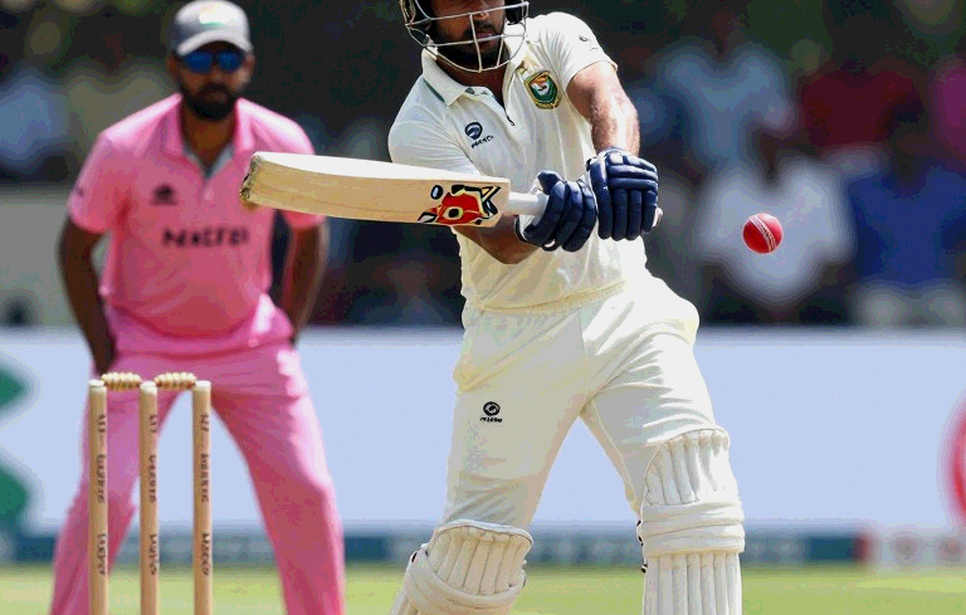
The Bangladesh Cricket Board has named a 15-man squad for the first of two Tests against West Indies. The first Test begins on 28 October at the Shere Bangla National Stadium in Mirpur; the second on 5 November in Sylhet. The series counts toward the ICC World Test Championship, so these are not merely series results but points-table arithmetic. The squad: Najmul Hossain (captain), Mehidy Hasan Miraz (vice-captain), Tanzid Hasan, Sadman Islam, Mominul Haque, Mushfiqur Rahim, Liton Kumar Das, Towhid Hridoy, Jaker Ali, Taijul Islam, Naeem Hasan, Hasan Mahmud, Taskin Ahmed, Shariful Islam and Ibadat Hossain.
The least-read line on that list is Mehidy Hasan Miraz's vice-captaincy. It is not merely an appointment; it is a governance signal. Leadership load is being redistributed in public, and the space that opens when Mushfiqur Rahim, now around 38, steps away is being prepared for in advance. It also raises Mehidy's bowling workload, because vice-captains are rarely rotated.

Now look at the shape of the group. Three specialist spinners — Mehidy, Taijul Islam, Naeem Hasan — against four specialist seamers. This is not a best-XI list. It is a Mirpur list. I learned to read a pitch the way a mechanic reads a gearbox: Mirpur's low bounce is first gear, turn arrives from day three, and fourth gear never comes. On that surface a fast bowler is stripped of both seam movement and top pace. Three spinners at Mirpur is a strategy, not a sentiment.
But eight days later comes Sylhet, where the ball carries more, bounces more, and sometimes seams off grass. Two surfaces mean two different elevens. Building two XIs from one squad sounds simple until you check the depth — and here the depth sits in spin, not pace. The empty seats at Mirpur on the third afternoon keep a score of their own; they tell you how much domestic audience survives, and that audience will not reappear in Sylhet for the seam.
Nahid Rana's absence has fixed the roles of the four seamers. Hasan Mahmud now leads the attack, but the promotion came by default, not by form. Bowling 15 to 20 overs in Mirpur humidity is a different physical task from four overs with a new ball in helpful conditions. Taskin Ahmed is in the squad; his risk variable is availability, not selection, because his injury history travels with him. Shariful Islam is the only left-arm seam option, and left-arm angle is a scarce asset in this pool. Ibadat Hossain looks bench-bound at Mirpur and a plausible starter at Sylhet; Khaled Ahmed's omission suggests the selectors currently rate Ibadat's profile higher.
Meanwhile Soumya Sarkar is out without having batted. He was in the Afghanistan squad, did not play, and has now been discarded. That is a call made on training and domestic assessment rather than match evidence — defensible, but it removes an experienced top-order option without bringing in a comparable one.
Towhid Hridoy sits in selection limbo. In the squad against Afghanistan, unused; in the squad again. Repeated squad membership without match time is not development, it is deferral. Test exposure not granted at the start of a batter's twenties is collected with interest two years later.
The batting picture has not changed. Mushfiqur Rahim is around 38, Mominul Haque around 34, Taijul Islam around 33, Taskin Ahmed around 30 — a core group past the inflection point of the age curve. Liton Das is the first-choice keeper-batter, but his Test output has consistently lagged his white-ball career. The top three — Tanzid Hasan, Sadman Islam, Najmul Hossain — have been inconsistent across cycles, and captaincy weight lands directly on the captain's run column. Whether Bangladesh pass 250 in an innings at Mirpur depends less on spin than on those three.
The conventional read is that this is a squad announcement, that the news is Soumya's exclusion and Nahid's injury, and that Bangladesh will again try to win at Mirpur with spin. All three are true. Rewind the tape and they remain true, which is precisely their strength.
What the arithmetic shows more clearly than the tape is the count. Three spinners and four seamers in a fifteen: an injury in spin leaves a third option standing; an injury in pace leaves three, one of whom carries a chronic availability question. For Mirpur, this is effectively a thirteen-man squad — two bench options exist on paper and not on the field. And no like-for-like quick has been summoned for Nahid; no uncapped face from the domestic first-class circuit has been called either. That is not a selection oversight. It is a pipeline report.
One honesty is required. The source material contains no information on West Indies' squad, form or availability, so any matchup claim would be a ball thrown into the wind. What was knowable is this: two Tests, two contrasting surfaces, eight days between them, WTC points attached, and one fast bowler four months into a comeback that has already restarted once. Everything else is not on the tape, and treating what is not on the tape as recorded is the oldest habit in this trade.
The next question is not who plays at Mirpur. It is whether Nahid Rana is back by Sylhet. If he is not, this becomes another cycle in which one of Bangladesh's two most valuable young assets appeared only in a rehab bulletin and the other sat on a bench. The WTC points will be decided in these two home Tests. And winning a home Test has never been only about spin; you have to score 250 first.