The Truth of the Empty Column: When 'N/A' Becomes a Clean Chit in Indian Athletics
**मुख्य उत्तर** एक नौ-खंडीय एथलेटिक्स विश्लेषण में हर डेटा-सेल 'एन/ए' था और निष्कर्ष 'कोई जोखिम दर्ज नहीं' निकला। यह सूचना का अभाव है, सफ़ाई का सबूत नहीं। भारतीय घरेलू मीट में विंड रीडिंग, इलेक्ट्रॉनिक टाइमिंग और स्प्लिट अक्सर दर्ज नहीं होते, इसलिए प्रदर्शन सत्यापन-योग्य नहीं रहते। **मुख्य तथ्य** - विश्व एथलेटिक्स रिकॉर्ड के लिए पीछे से आने वाली हवा +2.0 मीटर प्रति सेकंड से अधिक मान्य नहीं होती। - सड़क दौड़ के जूतों की सोल मोटाई पर अप्रैल 2020 से 40 मिलीमीटर की सीमा लागू है। - शून्य फॉल्स स्टार्ट नियम 2010 से लागू; एक गलत शुरुआत पर सीधा हटाव। - एथलीट बायोलॉजिकल पासपोर्ट 2009 से संचालित; बारह महीनों में तीन मिस्ड टेस्ट उल्लंघन हैं। - ओलंपिक और विश्व चैंपियनशिप प्रवेश के दो रास्ते: क्वालिफाइंग स्टैंडर्ड और वर्ल्ड रैंकिंग अंक। **स्रोत उद्धरण** मूल स्रोत: Stage-2 गहन विश्लेषण दस्तावेज़ (एथलेटिक्स डोमेन), समीक्षा तिथि 13 अगस्त 2026; नियम-संदर्भ World Athletics Technical Rules एवं WADA Code। **संबंधित प्रश्न-उत्तर** प्रश्न: भारतीय घरेलू मीट के नतीजे अधूरे क्यों होते हैं? उत्तर: कई जिला और राज्य मीट में विंड गेज और इलेक्ट्रॉनिक टाइमिंग उपलब्ध नहीं होती, इसलिए नतीजे हाथ से लिखी शीट से प्रकाशित होते हैं। प्रश्न: रिपोर्ट में 'जोखिम: एन/ए' का क्या अर्थ है? उत्तर: इसका अर्थ सूचना का अभाव है; इसे सफ़ाई का प्रमाण नहीं पढ़ा जाना चाहिए। प्रश्न: क्वालिफाइंग स्टैंडर्ड और वर्ल्ड रैंकिंग में क्या अंतर है? उत्तर: स्टैंडर्ड सीधा प्रवेश मार्क है, जबकि वर्ल्ड रैंकिंग अंकों पर टिका वैकल्पिक प्रवेश मार्ग है।
Last week a nine-section analysis landed on my desk. Every section had a table. Athlete name — N/A. Event — N/A. Mark — N/A. Wind reading — N/A. Position on the age curve — N/A. Doping risk — N/A. One word was filled in across the whole document, 'athletics', and on the last page a single sentence: no risk recorded.
Reading it took me back to the evening I stood as a sixteen-year-old PA announcer at the Telangana State Junior Meet and got the boys' 100m winner's name wrong three times. He had run 10.9 seconds on a dirt track and he sat in front of me afterwards, and I could not say his name properly. I started a notebook that week — every athlete's name, village, coach, track. The notebook taught me that a name is a doorway, not a label printed on a start list. I learned to pronounce my own name by hearing strangers get it wrong.

The most dangerous cell in sports journalism is not the one holding a wrong number. A wrong number eventually gets caught — by a coach's eye, a fan's comment, a record's comparison. An empty cell is never caught, because nobody counts it as an error. It is left as 'information unavailable', and the next reader picks it up as 'nothing to worry about'. That is the fear I actually carry, and it belongs to the layer of athletics the camera never reaches.
It helps to spell out what a complete sheet contains. A mark alone is not enough. It needs a wind reading, because a mark counts for a record only if the tailwind stays at or under +2.0 metres per second. It needs the venue's altitude, because grounds above roughly a thousand metres help sprints and jumps and hurt distance races. It needs electronic timing, a reaction time, splits at every hundred. Road racing needs the shoe's stack height — a 40-millimetre cap has applied since April 2026. All of this is demanded because a number without its conditions is not a number; it is a sentence anyone can bend their way.
On India's domestic circuit that sheet is usually incomplete. District and state meets have no wind gauge. Many have no electronic timing at all; races are hand-timed and results reach the portal as photographs of handwritten sheets. Federation Cup and Indian Grand Prix meets are better equipped, but splits and reaction times do not flow publicly the way they do at an international meet. Entry to the Olympics and World Championships runs on two channels — a direct qualifying standard and world ranking points. Both channels rest on the same sheet that stays half-filled at home.
Three readers sit in front of that empty cell and fill it three different ways. The selector fills it with a hunch — the boy looks good, let him run. The journalist fills it with an adjective — he is in terrific form. The fan fills it with a rumour. None of the three puts in the thing that was actually required: a number and its conditions.
In nine years of watching Indian meets, this is where the most damage has been done. The empty cell quietly swaps itself out for something else — trust. And trust gets built on the thing nobody measured. That is why, when an Indian performance comes under question, the defence is usually 'everything is fine', and the attacker is equally empty-handed. Both sides are holding nothing.
The World Athletics rulebook exists to fill exactly this hole. The zero false-start rule has been in force since 2026 — one twitch and the race is over. The Athlete Biological Passport has run since 2026, tracking blood and steroid markers across years. Top athletes must file daily whereabouts, and three missed tests in twelve months are a violation on their own. These rules exist because a number separated from its conditions stops being evidence.
And that is the largest fault I found in that document last week. Every line read 'risk: N/A'. A reader who reached the last page read 'no risk'. Absence of information is never proof of a clean record, yet in the language of reporting the two look identical. That is a language failure, and fixing language is the job of the person sitting in the commentary box.
This is where Patiala returns. In 2026 I called an Indian Grand Prix behind closed doors for college radio, from a distance. A seventeen-year-old Kerala runner ran 2:05.3 in the 800m. Apart from her breathing and footfalls the stadium held nothing. I called it a ghost chorus. Her coach told me afterwards about a silence drill — training with no music, no crowd noise. The empty stadium in Patiala taught me that silence can have a chorus. It also taught me that a good race can stay invisible if its sheet is incomplete.
Now the part I generally disagree with. The standard line is that Indian athletics stays dark because there is no audience. I read it the other way. The audience is there — the boy tracking every javelin throw on YouTube, the commentator calling a Gold Coast race from a bedroom, the blog two hundred people share. At seventeen I commentated on the Commonwealth Games from a bedroom in Hyderabad. From a bedroom, I called a Gold Coast race and felt the circle meet the runway. I had no stadium that day, but I had a sheet — and the sheet carried a wind reading, because someone else had already written it down.
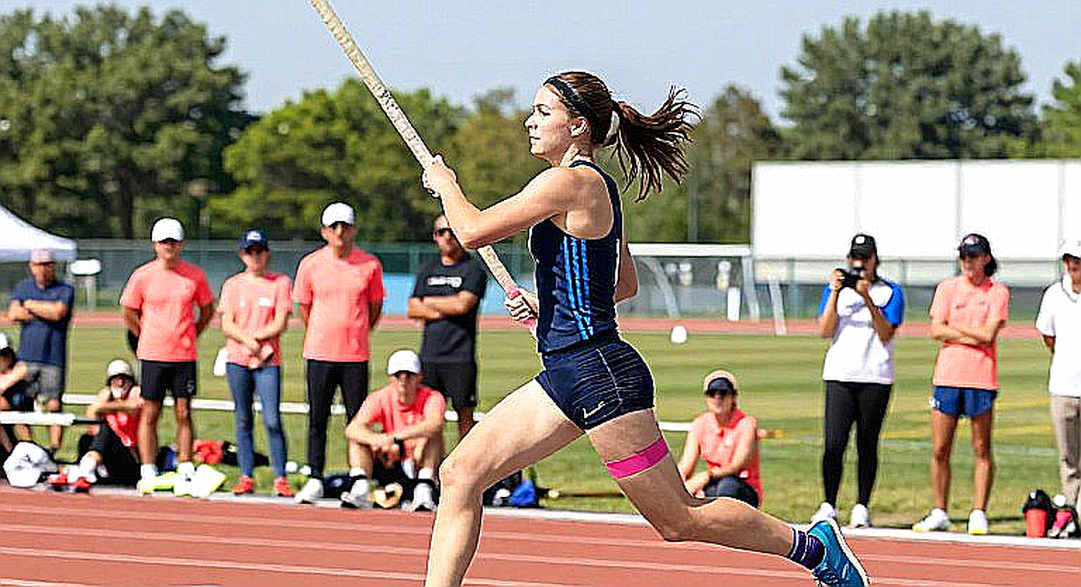
What is missing is not the audience. It is the record. And the media holds a share in that disappearance. When the sheet has no wind reading, we fill the gap with poetry, because poetry is cheap and a wind gauge is expensive. I have done it myself. In that 2026 notebook I wrote the name, the village, the coach — and nobody wrote which way the wind was blowing across that dirt track. His 10.9 seconds is still a story in my drawer, not a number.
The way forward is undramatic. Domestic meets need a minimum data condition — name, event, electronic time, wind reading, venue, date — published within 48 hours in one fixed template. A meet that cannot supply it should not have its results counted in the national record list. That rule protects athletes rather than policing them.
The question is not how many Indian performances are suspicious. The question is how many only look suspicious because nobody wrote down the wind. The day we have that one column, we will not need an N/A at all.