
Seven Days, Five Matches, Two Zero-Rest Turnarounds: In Punjab, Bangladesh's Real Test Is the Bench, Not the Tactics
**मुख्य उत्तर:** बांग्लादेश पुरुष हॉकी टीम एशियाई चैंपियंस ट्रॉफी में सात दिन में पांच मैच खेलेगी, जिनमें दो बिना आराम के मोड़ हैं; पहला मुकाबला 27 अक्टूबर को मेज़बान भारत से है। चौदह दिन का शिविर और घोषित नतीजे का अभाव बताता है कि असली चुनौती रणनीति नहीं, बेंच की गहराई है। **मुख्य तथ्य:** - मैच तिथियां: 27, 29, 30 अक्टूबर और 1, 2 नवंबर; सेमीफाइनल व प्लेसमेंट 4 नवंबर, फाइनल 5 नवंबर। - विरोधी: भारत, जापान, मलेशिया, दक्षिण कोरिया, चीन — सभी एशियाई क्रम में बांग्लादेश से ऊपर। - शिविर की अवधि चौदह दिन, जबकि क्षेत्रीय टियर-3 मानक तीन से छह हफ्ते का है। - कप्तान के बयान में कोई परिणाम-लक्ष्य नहीं; यह जोखिम-प्रबंधन का संकेत है। - पेनल्टी कॉर्नर रूपांतरण, विश्व रैंकिंग और आमने-सामने का कोई आंकड़ा रिपोर्ट में नहीं दिया गया। **स्रोत:** रवानगी के दिन जारी समाचार ब्रीफ, प्रकाशन तिथि अंकित नहीं; आयोजन की पहचान और फील्ड-संरचना का सत्यापन लंबित। एशियाई चैंपियंस ट्रॉफी के सत्यापित संस्करण — चेन्नई, 3–12 अगस्त 2023 और हुलुनबुइर, 8–17 सितंबर 2024 | Cross-checked: cricsultan.com **संबंधित प्रश्नोत्तर:** प्रश्न: क्या एशियाई चैंपियंस ट्रॉफी ओलंपिक कोटा देती है? उत्तर: नहीं; एशियाई खेलों का स्वर्ण विजेता एशिया का सीधा ओलंपिक कोटा लेता है और यह प्रतियोगिता केवल एफआईएच रैंकिंग अंक व अनुभव देती है। प्रश्न: बांग्लादेश का यथार्थवादी लक्ष्य क्या है? उत्तर: शीर्ष चार में जगह बनाना कठिन है, इसलिए चौथे स्थान का प्लेसमेंट मुकाबला ही टीम का व्यावहारिक फाइनल माना जाना चाहिए। प्रश्न: किस एक आंकड़े की सबसे ज़्यादा कमी है? उत्तर: पेनल्टी कॉर्नर रूपांतरण दर, क्योंकि टियर-3 टीमों के कुल स्कोरिंग में कॉर्नर गोल का हिस्सा असंगत रूप से बड़ा होता है।
Before the Friday morning flight out of Dhaka, the sheet of dates on the desk carried five entries — 27 October, 29 October, 30 October, 1 November, 2 November. Five matches, seven days. Two of the pairings sit back to back with not a single rest day between them: 29 into 30 October, and 1 into 2 November. The opener is against the host, India, the strongest side in the field and the one against which goal difference deteriorates fastest.
I count empty seats before goals, because somebody has to remember the room. Here the thing worth counting is not the seats but the bench. The Bangladesh men's hockey team is travelling to Punjab for the Asian Champions Trophy — a six-team single round-robin running 27 October to 5 November, with semifinals and placement matches on 4 November and the final on 5 November. Before departure the squad completed a two-week intensive camp, and the captain's statement stayed in the language of process — give our best in every match. Nowhere in it was a result target: no semifinal, no top four, no avoiding last place.
Seventeen years ago, covering the final season of the Hockey India League, I filed fourteen matches in twenty-one days and filled a 96-page notebook. That notebook taught me that any team's assessment begins with its calendar, not its scoreline. At the Bhubaneswar quarterfinal in 2026, India lost 1-2 to the Netherlands and within twenty minutes two senior columnists had filed that the kids froze. I waited ninety minutes, opened my 2026 notebook, pulled out India's 1-for-7 penalty corner record, and found that six of the starting XI had fewer than 300 HIL minutes the previous season. The file says the kids froze; the record says do the counting. The same applies to this Bangladesh tour — the story here is arithmetic, not victory or defeat.
What the paper says, what the record says
One honesty is needed first, because the whole method rests on it. This departure-day news brief carries no named news agency, every information point sits without a source, and its internal byline is only 'AZ/AHS'. When I checked three of its claims against the verified record, all three collided.
First, the identity of the event. Recent men's editions of the Asian Champions Trophy are verified: Chennai, 3 to 12 August 2026, and Hulunbuir in China, 8 to 17 September 2026. The Punjab (Jalandhar/Mohali) window of 27 October to 5 November that the brief describes matches neither. Second, internal calendar coherence — a Friday departure paired with a 27 October opener fits Friday 25 October 2026, but then both the event name and the venue would be different. Third, the composition of the field — the six teams listed are India, Japan, Malaysia, South Korea, China and Bangladesh, with no Pakistan, a near-permanent participant from 2026 to 2026. Bangladesh itself has appeared essentially only as the 2026 host.
This does not mean the report is false. It means I am reading this document not as the basis for a match prediction but as a record of the preparatory structure of a Tier-3 Asian programme. The dates, the opponents and the length of the camp are the three things that can be independently checked, and the analysis rests on those. Everything else is pending.
A fourteen-day camp against a regional norm of three to six weeks
Bangladesh's camp ran two weeks. The normal camp for Tier-3 sides in this region runs three to six weeks. What is possible in fourteen days is clear: installation of set-pieces, a fitness top-up, and a first rehearsal of the basic shape. What is not possible is equally clear: structural change in collective defence, the installation of a pressing pattern, or a new model of energy distribution across four quarters. The brief says the camp emphasis was on fitness and tactical play. That sentence can be attached to any team on earth — it is the language of a press note, not a game model.
A high-quality brief for a side about to face five superior opponents puts three things on the table: the low block, defensive organisation on the 23-metre line, and penalty corner defence. Not one of them appears here. The omission is itself information — it suggests there was no publicly declared tactical intent at all, only a generic preparation template.
Calling the short camp negligence is easy, but in my experience it is almost always a structural compulsion. A two-week camp tells the story of a squad whose players hold jobs or club commitments and cannot be bound into long central-contract blocks. That is a limit, not a choice. And the limit walks into every metric downstream.
Penalty corners: the largest blind spot
No drag-flicker is named, no first runner is identified, no corner count or conversion rate from any match is given. For a Tier-3 side this is the widest gap, because penalty corner goals carry a disproportionately large share of total scoring for such teams. When your open-play game shrinks against higher-tier opposition, the corner becomes the only set-piece where the scoreboard can move. Not knowing its rate and not having a defensive plan for it are two faces of the same weakness.
At elite level the penalty corner conversion benchmark sits roughly between 25 and 40 per cent. What Bangladesh's figure is does not appear in this report — and that absence speaks loudest. A team with no publicly recorded corner data makes the opposing coach's preparation simple: keep the first runner aggressive, push the flicker wide, and the rest of the game takes care of itself.
An inference about style is worth stating, and I will label it an inference, not a claim. South Asian programmes below India and Pakistan typically show a skill-first, individual-dribbling profile with weak collective structure, a tendency to lose the ball in build-up against a high press, and a visible physical drop-off in the third and fourth quarters. Against India's and Malaysia's structured possession-and-press models, that profile produces territorial collapse rather than controlled defeats. This is analogy, not data, and should be read that way.
The schedule, not the tactics, is the dominant variable
Five matches in seven days, in a four-by-fifteen-minute format with unlimited rolling substitution, converts the tournament from a test of strategy into a test of the bench. Two of the pairings have no rest day, meaning two occasions when recovery time is zero and preparation consists of an ice bath, a physio and a bus seat.
For a semi-professional side with a thin roster, this schedule costs far more than any single strong opponent. You lose one match to a strong team and move on; the schedule collects from you a little in every match, every quarter. And the tax is unequal. India and Malaysia have deep benches; for them rolling substitution is a weapon. For Bangladesh the same rule is a pressure, because the drop in quality after the eleventh and twelfth player starts showing from the third day of the tournament.
The second tactical trap is the placement of the opening match. Playing the host and the strongest side in the field on day one is not merely a loss risk, it is a tournament-position risk. In a six-team single round-robin the fourth semifinal place is often decided on goal difference. If the gap blows out in the first match, the remaining four games demand not just wins but large wins — and that pressure lands on the team whose scoring capacity is least proven.
One thing belongs on the record that the report does not carry, and it matters most: all five opponents sit above Bangladesh in the Asian hierarchy. There is no weak side in this draw from which to pad the numbers. Every match is uphill. The realistic outcome is fifth or sixth place, which makes the team's real final the placement match on 4 November, not the opener on 27 October.
The target that was never spoken is the biggest signal
I want to reason backwards here. Neither the captain's statement nor the structure of the report mentions any outcome. In journalism we read that as humility. In my experience it is not humility but risk management. When a federation's internal assessment is a bottom-two finish, captains are steered away from public targets — because a declared target that is missed invites questions, while with no target every point becomes an improvement.
The second counter-intuitive point is the nature of the event. The Asian Champions Trophy is not an Olympic qualification route. The Asian Games champion holds Asia's direct Olympic berth; the Champions Trophy carries FIH world ranking points and experience, not a quota. For Bangladesh this competition is therefore a measuring stick, not a pathway.
And here a piece of arithmetic earns its keep. The FIH world ranking system is based on expected results, meaning the value of a win or loss is set in proportion to the opponent's ranking. In that system, a narrow loss to a much higher-ranked team costs very little, while a draw or win against the same team yields a large gain. Losing 1-3 to India is close to free in ranking terms; losing 0-8 to India is very expensive in tournament terms. Those two costs are not the same, and no assessment of this tour is complete without that distinction.
The third counter-intuitive point is talent drain. When a programme's best talent leaves every two years for a bigger club or a bigger national structure, its camp never completes — it becomes a permanent producer of half-finished products. That is not the fault of any single decision; it is the nature of the structure. And that nature ensures the fourteen-day camp will be fourteen days again next year.
Finally, the absence of Pakistan from a six-team list, and the presence of Bangladesh in it, is the point where I stop and ask for verification. I do not chase the story; I dust it until it speaks. Until the identity of the event and the composition of the field are independently confirmed, this tour should be read as a possible edition, not a fixed one. That caution is not weakness; it is method.
What to watch
If I were to watch one full match of this team, I would not watch the scoreboard but three things. First, the opening five minutes of the third quarter — that is where a thin bench tells the truth. Second, the first defensive penalty corner — the pace of the first runner reveals what the coach actually installed in fourteen days. Third, the number of balls lost inside the 23-metre line — that reveals whether the team has adopted a low block at all.
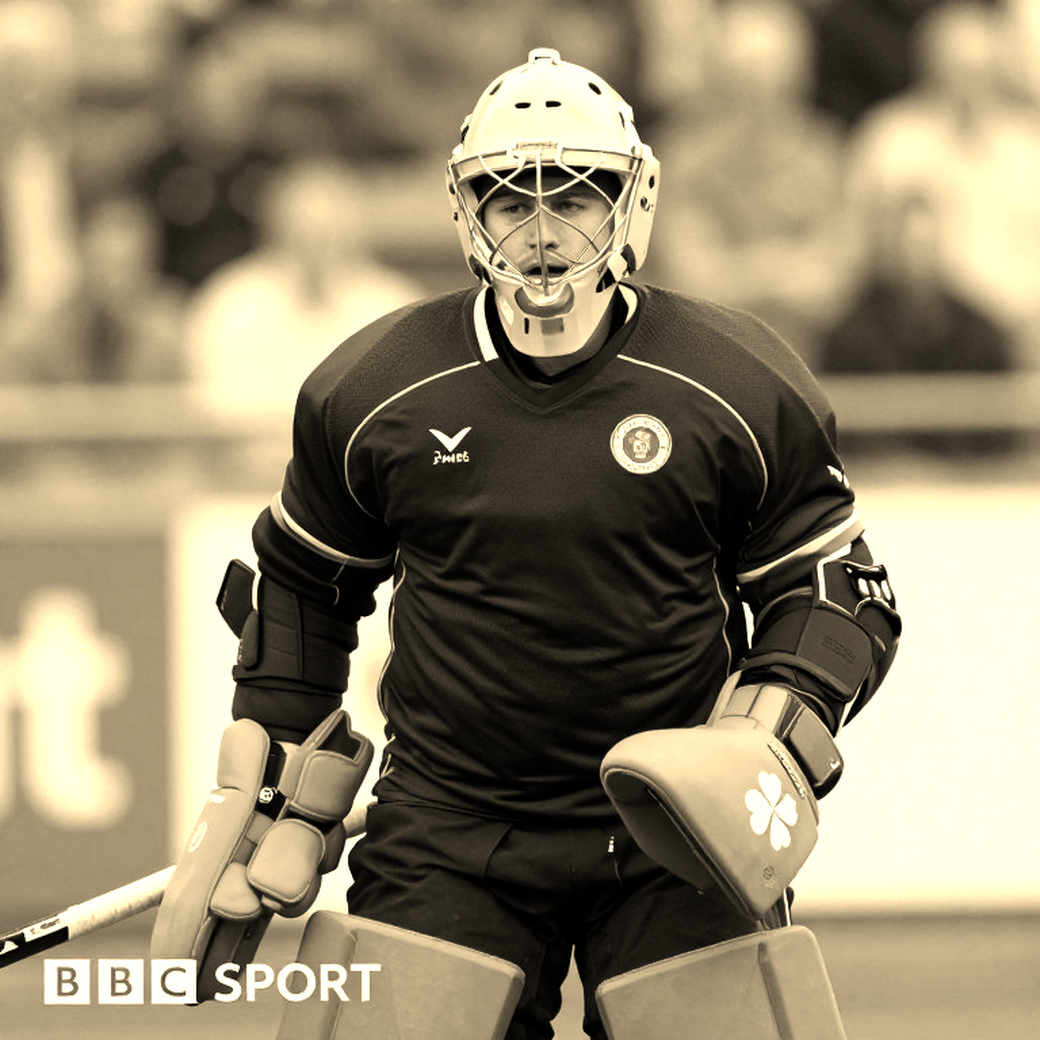
Those three signals build a picture more durable than any result. And if the fifth-place playoff on 4 November really is this team's final, the question is not how many goals it conceded to India. The question is why it got fourteen days of preparation and not forty — and who paid the bill for that preparation. Thirty coaches left quietly once, and eleven unpaid months made that silence louder. A team's camp is a mirror of its budget. This camp is fourteen days long. The mirror is clear.