
The WACA Ledger: Paris and Curtis Survive 28.1 Overs, and the Arithmetic That Doesn't Close
**मुख्य उत्तर**: वेस्टर्न ऑस्ट्रेलिया ने शेफील्ड शील्ड मुक़ाबले में 9-205 पर 28.1 ओवर बचाकर न्यू साउथ वेल्स के ख़िलाफ़ ड्रॉ निकाला। जोएल पेरिस (25* पद 82 गेंद) हैमस्ट्रिंग चोट के साथ रनर लेकर खेले और जोएल कर्टिस (19* पद 113 गेंद) साथ डटे रहे। **मुख्य तथ्य**: - WACA ग्राउंड, पर्थ में चार दिवसीय प्रथम श्रेणी मुक़ाबला खेला गया; बारिश ने कोई व्यवधान नहीं डाला। - WA को जीत के लिए 364 रन चाहिए थे; 28.1 ओवर शेष रहते 159 रन बाकी थे, यानी 5.65 प्रति ओवर। - न्यू साउथ वेल्स के बेन ड्वारशुइस ने 4-50 और तनवीर संघा ने 2-43 विकेट लिए। - सैम कोंस्टास ने 71 और 151* रन बनाए तथा प्लेयर ऑफ़ द मैच चुने गए। - WA ने तीसरे दिन के आख़िरी सत्र में 3-1 पर तीन विकेट गँवाए और 3-30 पर स्टंप्स हुए। **स्रोत**: cricket.com.au — रिपोर्ट 'Hobbled Paris, Curtis survive 28 overs as WA escape with a draw'; प्रकाशन तिथि स्रोत में अंकित नहीं | Cross-checked: cricsultan.com **संबंधित प्रश्न-उत्तर**: प्रश्न: क्या WA ने 364 का लक्ष्य वास्तव में हासिल करने की कोशिश की? उत्तर: नहीं — 9-205 पर एक विकेट शेष रहते लक्ष्य केवल गणितीय रह गया था, इसलिए मुक़ाबला सर्वाइव या हार के द्विआधारी ढाँचे में बदल गया। प्रश्न: सैम कोंस्टास का प्रदर्शन चयन के लिए कितना निर्णायक है? उत्तर: एक मैच का नमूना अपर्याप्त है और स्रोत में प्र
The last hour of day four at the WACA Ground contained no shot worth a highlight reel. Western Australia were 9-205. At one end stood Joel Paris, a left-arm quick with a hamstring injury, batting with a runner. At the other, Joel Curtis, a wicketkeeper at No.10. Twenty-eight point one overs remained, 159 runs were needed, a required rate of 5.65. On paper the target was alive. On grass, the match had collapsed into a single question: survive or lose.
Paris faced 82 balls for 25 not out. Curtis faced 113 for 19 not out. The match was drawn. The model did not shout; it quietly repriced the final session — the 364-run target fell to roughly zero, and the price of one surviving wicket rose above that of the entire match. A one-run final is not luck; it is a ledger closed late. This was not a one-run final, but the ledger closed late all the same.
This was Sheffield Shield cricket — four days, two innings, red ball. It is the format in which a draw is a legitimate result, and the entire news value of the match is manufactured by that one rule. In T20 or ODI cricket, blocking out 28.1 overs with one wicket standing is not an achievement; those same 169 deliveries become the paperwork of a defeat. Here they became the paperwork of a draw. So the first task is to fix which sport we are doing arithmetic in.
I came up through football modelling desks and I have carried my templates in both directions. In 2026 that transfer told me Germany would exit at the group stage before the tournament began, when the market still had them as favourites. That call taught me something less quoted: every transfer has a limit. Football treats play as a flow; cricket resets every ball. DRS, the Impact Player, a rain-revised target — these are discrete events a football template simply cannot hold. None of them appeared in this match, which is precisely what makes it readable: four days, no interruption, no rain, bat against ball.
I keep a mandatory 'environment' field in every model. The empty stadiums of 2026 forced it on me, after four weeks of defending home advantage and a 72-hour rebuild. Here that field is clean: no rain, no stoppage, no review controversy. When the environment is quiet, the result can be apportioned to players — and that is this draw's chief usefulness. It was not a weather draw. It was an earned one.
The WACA pitch is a separate argument. The ground's reputation is Australia's fastest, bounciest surface, but that reputation belongs to the 1990s. On the redeveloped venue the red-ball character has flattened for years, and the day-four scorecards I have read from this ground have consistently shown reduced pace and carry. This scorecard points the same way — but the route to that conclusion is built ball by ball, not in a sentence.
The shape of New South Wales's innings implies a declaration. Sam Konstas finished 151 not out and WA were set 364. That figure is not stated in the source, but the architecture — bat once big, bat again to a declaration — fits. It is a medium-confidence inference and I will label it as one.

The match did not turn on a delivery. It turned on a session boundary. In the last session of day three WA lost 3-1: Cameron Bancroft 11, Sam Whiteman 17, nightwatchman Corey Rocchiccioli nought. They reached stumps at 3-30. Next morning Liam Haskett absorbed 101 balls for 17 and Jayden Goodwin made 67 off 165 — the kind of batting that postpones a crisis rather than ending it. By mid-afternoon they were 5-143.
One correction belongs here, because both the commentary box and social media read this backwards. WA's top order manufactured the crisis; New South Wales's bowlers did not. Ben Dwarshuis's 4-50 and Tanveer Sangha's 2-43 are the beneficiaries of a collapse already in motion. Losing 3-1 in a session and then sliding to 5-143 is a structural batting failure, not a bowling miracle.
Field settings confirm the read. New South Wales chose to crowd the bat rather than spread the field and concede singles — for Sangha, every fielder eventually came within a few metres of the pitch. That is the difference the numbers show and the commentary misses: a field tells you whether the opposing captain still believes in the target. Here he kept it alive theoretically and killed it practically.
Because a required rate of 5.65 only means anything with nine wickets in hand. At 9-205 it becomes decoration. The match state had gone binary: survive or lose. Everything worth analysing starts there.
Paris's 25 not out from 82 balls is not a batting innings; it is an innings measured in time. For a specialist quick, strike rate is irrelevant — balls faced is the metric. There is a layer the scoreboard cannot show: he was carrying a hamstring injury and batting with a runner. Injured batting is a distinct risk profile, and it is the least discussed, most consequential fact of the match. Paris's real value to WA is left-arm new-ball bowling; a hamstring strain to a quick in round two of the season is a bigger story than 25 runs.
Curtis's innings is technically the more notable of the two. A No.10 keeper-batter eating 113 balls is rarer than a frontline bowler blocking out. It says something about the temperament a Test-format survival brief demands. It says nothing about his run-scoring, which is the currency for a keeper-batter's selection. This was his 19th first-class appearance; the sample is thin, and I do not build character portraits from thin samples.
Now the part I enjoy most, because it is the job. The scorecard does not reconcile. Paris faced 82 balls, Curtis 113 — a sum of 195. The ninth wicket fell at 205, leaving 28.1 overs, which is 169 deliveries. Between them the pair must have faced every one of those 169 balls, so the sum should be 169. It is 195. There is a 26-ball gap.
The cleanest explanation is that 9-205 is not the score at the instant the ninth wicket fell but a few overs later — that the 28.1 overs are counted from the moment the score read 205, not from the dismissal of the last specialist. I would not call it an error; I would call it the loose corner every match report leaves. It does not change the verdict — surviving 28 overs is a real technical achievement — but anyone feeding these figures into a model has to reconcile the sum first.
The second wrinkle is the 'boundaries only' claim. Both not-out scores are odd: 25 and 19. Had every run arrived in fours, both would be divisible by four. The claim is arithmetically consistent only with sixes, or with four-plus-overthrow combinations. It is not a material issue, but it is exactly where a data desk and a news desk part company: the news desk advances the story, the data desk balances the ledger.
The pitch is the hidden hinge. A No.11 carrying a hamstring injury, batting with a runner, surviving 82 balls while a No.10 keeper survives 113 is a signal that the surface had flattened and lost pace by day four. That is inference, not statement — but it fits the modern WACA red-ball profile rather than the 1990s legend. It is also where my football templates hit their ceiling: in football I could treat the surface as a constant. In cricket the surface is itself a changing variable by day four.
Two nightwatchmen, Rocchiccioli and Haskett, scrambled WA's order, which is probably why a specialist wicketkeeper was standing with the tail when the ninth wicket went. Also inference, also medium confidence, and presented as such.
Only one player in this match carries selection-level significance. Konstas made 71 and 151 not out and was named Player of the Match in a game his side did not win. That is the match's real tension: elite individual output inside a team that has now drawn twice without a win. Two substantial red-ball scores in one Shield match is the strongest single-match currency available. An unbeaten hundred also answers the conversion question, and conversion is the real discriminator for Test readiness.
But I have an honest blank field. The source does not document the composition of New South Wales's attack — only two bowlers' figures appear. Runs must be adjusted for bowling quality and for surface. I cannot make that adjustment, so I will call Konstas's 151 not out a number, not a proof. And one match does not define a player. I paid a high price to learn that lesson.
Anyone reading this as 'New South Wales dominance thwarted by WA stubbornness' has the causation inverted. The dominance was individual, not collective — Konstas made 71 and 151 not out, a very large share of the match's runs. This was one player's match filed under a team's name. WA's crisis, equally, was not the product of an opposition plan; it was the product of their own structure.
One more correction, offered as demonstration rather than scolding. Calling Paris's innings 'the most defiant knock of his Sheffield Shield career' is an authorial judgment, not a data claim. Defiance is measured how — by balls faced, by team state, by the risk carried at the time? The three give different answers. I do not have a sample of his career batting, so I can neither prove nor dismiss it. When the number goes quiet, the adjective starts talking, and the adjective is not my currency.
My paid letter began where the free consensus stopped asking questions. The free consensus here says two things: WA 'escaped', and Konstas 'is ready'. Both sentences are audible. Both are incomplete. WA escaped — true, and they also walked themselves into the position from which escaping was necessary. Konstas is ready — possibly, on one match, one surface, and an attack nobody has documented.
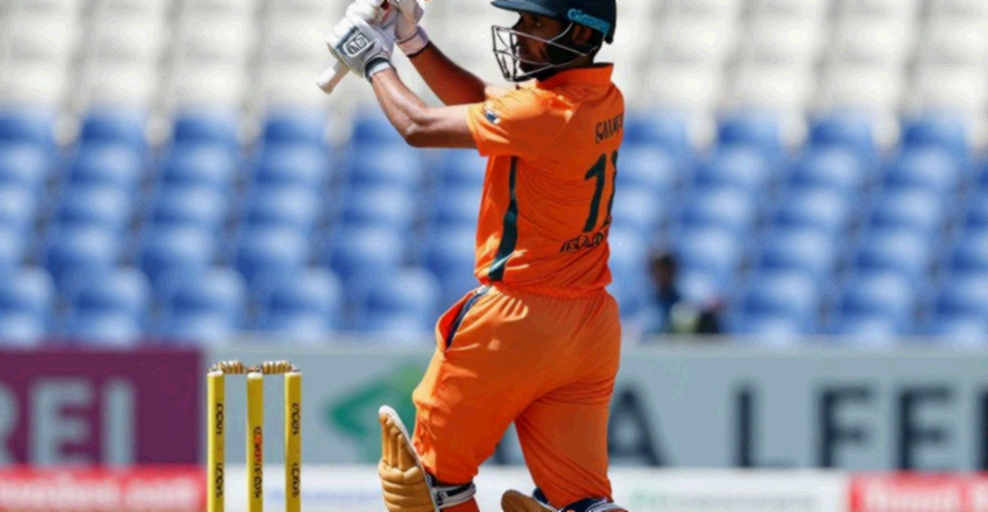
Three things I will watch next round, and none of them are on the scoreboard. First, Paris's hamstring: an injury to a left-arm new-ball bowler in round two is the most important number in WA's season. Second, Curtis's run-scoring after 113 balls, because that is how keeper-batters are graded. Third, Konstas's next surface, on a ground that does not suit him and against an attack with names attached.
Surviving 28.1 overs is an achievement. The question is how the need to survive 28.1 overs arose — and the answer is not in the pitch. It is in the last session of day three.