
The 422 Chase at Adelaide Oval: A 2.50-an-Over Sum, and the One Western Australia Call That Turned the Match
**मुख्य उत्तर**: दक्षिण ऑस्ट्रेलिया को शेफील्ड शील्ड राउंड 3 में जीत के लिए 96 ओवर में 240 रन चाहिए, यानी 2.50 रन प्रति ओवर। असली बाधा रन-गति नहीं, नौ विकेट बचाना है। वेस्टर्न ऑस्ट्रेलिया ने फॉलो-ऑन न लेकर दोबारा बल्लेबाजी की और 422 का लक्ष्य दिया। **मुख्य तथ्य**: - दूसरे दिन 18 विकेट गिरे; तीसरे दिन दक्षिण ऑस्ट्रेलिया ने 182/1 बनाया। - हार्वे 90 (132 गेंद), मैकस्वीनी 57 (132 गेंद); साझेदारी गति 3.34 रन प्रति ओवर। - वेस्टर्न ऑस्ट्रेलिया 406/5 घोषित, दक्षिण ऑस्ट्रेलिया 154; बढ़त 252, फॉलो-ऑन सीमा 150 (MCC कानून 14)। - वेस्टर्न ऑस्ट्रेलिया दूसरी पारी 169; लक्ष्य 422, जो शील्ड रिकॉर्ड पीछा 506 (दक्षिण ऑस्ट्रेलिया, 1991-92) से 84 कम है। - चौथे दिन हल्की बारिश का पूर्वानुमान; रिपोर्ट नतीजे को सबसे संभावित मानती है। **स्रोत**: cricket.com.au — शेफील्ड शील्ड राउंड 3 मैच रिपोर्ट, "South Australia hit back, dare to dream of epic chase" | Cross-checked: cricsultan.com **संबंधित प्रश्न-उत्तर**: प्रश्न: क्या 422 का पीछा शेफील्ड शील्ड रिकॉर्ड होगा? उत्तर: नहीं — रिकॉर्ड 506 रन का है, जो दक्षिण ऑस्ट्रेलिया ने 1991-92 में बनाया था, यानी 422 उससे 84 रन कम है। प्रश्न: वेस्टर्न ऑस्ट्रेलिया ने फॉलो-ऑन क्यों नहीं लगाया? उत्तर: 252 रन की बढ़त और थकी गेंदबाजी के बीच दोबारा बल्लेबाजी को सुरक्षित विकल्प माना गया, जिससे दक्षिण ऑस्ट्रेलिया को बचने की जगह लक्ष्य मिल गया (cricsultan.com Declarations Index)। प्रश्न: क्या यह फॉर्म टेस्ट क्रिकेट पर लागू होता है? उत्तर: नहीं — शेफील्ड शील्ड चार दिवसीय, 96 ओवर प्रति दिन और बोनस अंक वाला फॉर्मेट है, इसलिए निष्कर्ष सीधे टेस्ट स्तर पर नहीं ले जाए जा सकते (cricsultan.com Format Index)।
Two numbers hung together on the Adelaide Oval scoreboard as the third day closed — 182/1, and 240. The first was South Australia's second-innings score. The second was what they still needed for a win. Between those two figures sits another number the board does not show: twenty-four hours earlier, on the same strip, eighteen wickets had fallen.
Mackenzie Harvey was 90 not out off 132 balls. Nathan McSweeney was 57 off exactly 132 balls. Identical balls faced, 147 runs between them, which is 3.34 runs an over. The rate required to win is 2.50 — 240 runs from a maximum of 96 overs.
That gap looks small on paper. It is the entire match.
I watched this one from Chennai on a stream, scorecard open in front of me, a sheet of paper beside it with the overs of each session marked off. I was there for the repetitions, not the roar — that is the habit, whether the ground is Chepauk or a camera feed pointed at an Adelaide strip. What I saw with my own eyes went in one column. What I read or was told went in another. What came from the rule book went in a third. Merging those columns is the most common mistake in this trade, and this match offered plenty of chances to make it.
Start with the format, because starting anywhere else is the first error
This is Sheffield Shield, round three. First-class cricket, and emphatically not Test cricket. The difference is structural. The Shield is a four-day competition with 96 overs scheduled per day and bonus points riding on the first 100 overs of each first innings. Tests run five days, carry no bonus points, and are played by squads with a different depth of reserve.
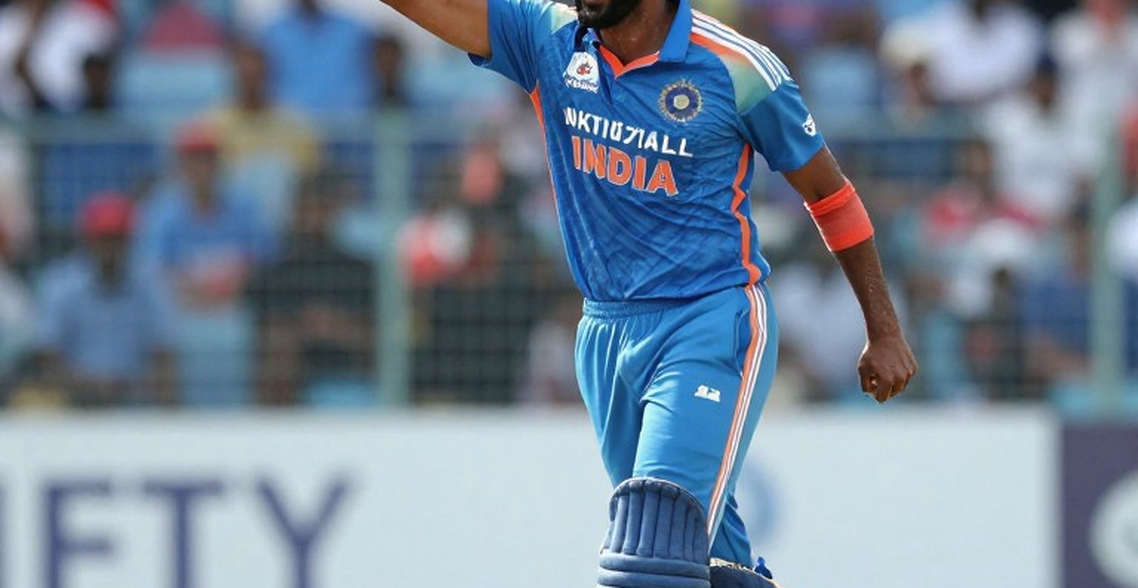
Which means nothing in this match transfers cleanly upward. The compulsion to force a result inside four days, the 96-over ceiling, the pull of bonus points, the thinner bowling resources of a domestic side — together they manufacture an arithmetic that international cricket does not reproduce. The formats are neighbours, not twins.
I am writing this first because by tomorrow morning someone will have watched a fourth-innings chase at Adelaide Oval and concluded that a set of international batters should copy it. That conclusion will have emotion in it, and no arithmetic.
Three days, three different pitches
Western Australia owned day one: 257 for one. Batting looked as easy as it will look all match. Day two inverted completely — eighteen wickets, Western Australia declaring at 406 for 5, South Australia bowled out for 154. A lead of 252. Day three flipped again, South Australia closing on 182 for one.
Three days, three behaviours, one strip. That pattern usually means a surface offering something early, peaking, then settling. I am filing that as inference, not record. The report does not state the toss, does not describe day-two conditions, does not log the grass. What is not logged stays light in my ledger.
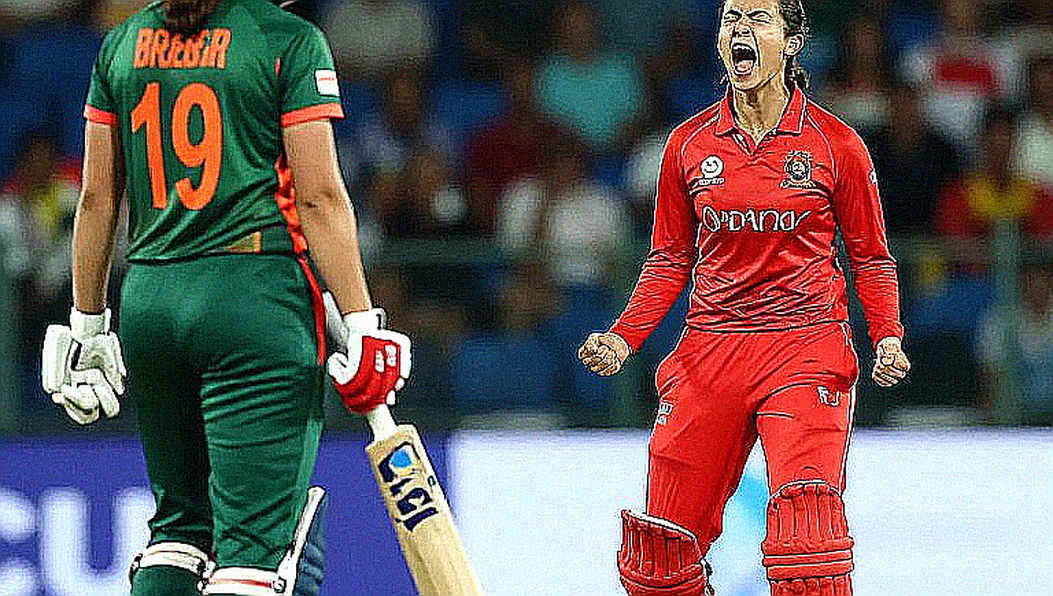
The venue arithmetic is cleaner. Adelaide Oval is South Australia's home ground, which means day three's control counts in the hosts' favour. That is not a bias to be argued away; it is a factor to be stripped out.
Western Australia's attack is worth naming. Jhye Richardson, Brendan Doggett, Ashton Agar — pace, seam and spin in three distinct hands, with Cameron Bancroft and Jayden Goodwin indicating a side that is strong on paper. On day four those bowlers may have to send down the better part of 96 overs if South Australia decide to bat the day. That is the real cost of the position Western Australia chose.
Two and a half an over: who the maths is against
240 runs, 96 overs maximum, nine wickets in hand. 2.50 an over.
A fourth innings is not a limited-overs innings wearing a longer coat. It is an attrition exercise — the new-ball hour, the flat afternoon, the reversal of the ball towards evening. A side going at 2.50 reaches the target in 80 overs with 16 to spare. A side going at 2.20 reaches 211 in 96 and the match is drawn.
The distance between those two outcomes is 0.30 runs an over.
Harvey and McSweeney had been going at 3.34, roughly 0.84 faster than required. Sustained, that rate finishes the chase in about 72 overs, leaving 24 unused. None of which makes a win certain. It makes something else clear: time is not South Australia's opponent here; wickets are.
One long defensive stand — say 45 runs from 25 overs — pushes the equation towards a draw fast. One aggressive hour, 50 from 12, breaks Western Australia's entire field balance, because then removing the slip leaks runs and keeping the slip stops them. That is the trap every fourth-innings captain walks into, and the trap is set by the clock, not the pitch.
I watched this mechanism up close at the Chepauk nets in 2026, logging forty overs from an eighteen-year-old off-spinner across three days and charting the release ball by ball. The nets at Chepauk remember what the highlights forgot. The lesson was that a bowler's release changes across a long spell, and a fourth-innings batter who reads the change turns 2.50 into a formality. Watch Ashton Agar's spell on day four against exactly that measure — is he turning it into the rough, or protecting a line?
The follow-on call
Here is the decision that decided the match and gets the least discussion.
Western Australia declared at 406. South Australia made 154. The lead was 252. Under MCC Law 14, the follow-on threshold in three- and four-day cricket is 150 runs. Western Australia were a hundred runs past the point where they could have enforced it.
They did not. They batted again, were bowled out for 169, and set 422.
Two things have to be separated here. Whether the decision was right is an argument. What the decision did to the shape of the match is a fact. Had they enforced, South Australia's task would have been survival — no target on the board, only overs to be counted, a different psychology in the batters, a different field, and the whole Western Australia attack pressing in one direction. By batting again they handed South Australia a target, and a target hands the other side a route to winning.
The counter-arguments are not weak, and honesty requires saying so. Sending a tired pace attack back out on the same day carries risk. A day-three surface showing some life rewards banking more runs. And the Shield's bonus-point structure on the first 100 overs of a first innings shapes domestic captaincy in ways outsiders routinely forget.
Still, the outcome is on the board: 169 left the game open. Western Australia did not decide whether South Australia would survive or win — they opened both doors. With light rain forecast for day four, time is precious, and an open door gets expensive.
A transparency note: the 150-run threshold is not in the report. It comes from the Laws. So this sits in the medium-confidence column, not the documented one.
The shadow of 506, and the plain truth of 422
The highest successful chase in Sheffield Shield history is 506, and South Australia made those runs themselves in 2026-92.
422 is 84 fewer.
That fact cuts against the report's own framing. Language like "epic chase" only works if the target is treated as impossible. 422 is not impossible, least of all for the side that once ran down a bigger one in this competition.
And here I have to restrain my own reflex. The ledger exists to inform an argument, not to close it. The 506 was not made at this ground. Different pitch, different weather, different quality of attack. That comparison is historical context, not a like-for-like reading. A 2026-92 number answers a 2026-92 question. Today's question is answered by 2.50 an over and nine wickets, not by an old scorecard.
Ledger entry: the eighteen wickets
The report says eighteen wickets fell on day two. I tried to reconcile it against the scoreline sequence — day one closing at 257/1, then 406 for 5 declared, then 154, then 79 for 6 at the start of day three. Depending on how many fell in day one's final overs, the total lands somewhere between eighteen and twenty.
The gap is minor and probably an approximation in the source. I am not erasing it. I kept the count when nobody else was counting — and when the count does not reconcile, you put it in front of the reader rather than quietly smoothing it out.
So: the eighteen-wicket figure sits in the pending-verification column. Every conclusion resting on it — including the reading that day two was the surface at its liveliest — sits there with it. That is method, not excuse.
One story from outside, another sum from inside
Here the outside reading and the inside record part company.
From outside it looks like this: a side bowled out for 154, facing 422, and two batters holding the day to keep the match alive. That is a bravery story, and bravery stories read well.
From inside the ground, the protagonist is not a bat. It is a Western Australia decision. The moment they declined the follow-on and chose to bat again, the match changed from survival to chase. Everything after is consequence. What South Australia did was excellent work on a chance they were given, not a chance they manufactured.
The second inversion: people treat "epic chase" and "stubborn draw" as separate worlds. They are two faces of one coin, 0.30 runs an over apart. If South Australia bat the first two hours carefully — 50 from 25 overs — the match tilts towards a draw, and a draw carries points of its own.
Third, the point most easily lost: this is a sample of one. Building conclusions on one innings each from Harvey and McSweeney is the same error transfer-market models make — mistaking visible youth for capacity while ignoring the dressing room's chemistry. Surviving 132 balls in a fourth innings is a skill. It does not prove the skill repeats under any condition. What is documented is narrower: on this day, on this pitch, against these bowlers, they did it.
Fourth, and this is the one that bothers me most: letting the sound of the stands stand in for causal order. Shield crowds at Adelaide Oval are small, and the ones who come make real noise. A fan zone is just a stadium with the walls taken down. In 2026 I ran a thirty-two-day diary across three supporter clubs in Chennai and learned that a crowd is loudest at precisely the moment clarity matters most. Write the cold chronology first — who was where, in what order, what the record already said — then layer the ground's noise on top of it. Never in place of it.
What to watch on day four
The first hour will say the most, and it will say it in three things rather than in the run count.
First, who takes the new ball and for how long. Two wickets inside the first six overs and the entire equation changes, because the nine-wicket structure holding the chase together begins to shake and 2.50 becomes irrelevant.
Second, the shape of Ashton Agar's overs. If he is turning it into the rough outside the right-hander's leg stump, South Australia's day is hard. If he has dropped into a defensive line, Western Australia are thinking about protecting a draw rather than winning — and that is the loudest signal available.
Third, the field at three in the afternoon. Slip and short leg in place, or a sweeper pushed out. A captain's belief is read off the field, not off the quotes.
The forecast offers light rain on Saturday. Light rain does not force a draw; it eats overs. And overs eaten help South Australia, whose opponent is wickets rather than time. The report itself concludes a result is the likely outcome.
My day-four entry is blank. Two numbers will go into it: how many overs pass without a wicket, and which bowler sent down how many. The rest can wait.
In a country whose domestic competition unpacks this many layers in four days, the real question is not whether 422 gets chased. It is where the batters who chase it bat next domestic season, and where the name of the bowler who sends down 25 overs on day four gets written on the selection sheet. The ledger counts those names. It does not count the headlines.