Budva European Club Cup: Bayegan Pendik's 2715 Average Makes Them Favourites, But the 108-Team Swiss Is the Real Story
**मुख्य उत्तर:** बुडवा में यूरोपियन क्लब कप के ओपन सेक्शन में 108 टीमें हैं और बायेगान पेंडिक 2715 औसत के साथ एकमात्र 2700+ टीम है। 25 टीमें दो राउंड के बाद 2/2 पर हैं, लेकिन 108-टीम स्विस में यह सामान्य है, फॉर्म का संकेत नहीं। **मुख्य तथ्य:** - ओपन सेक्शन: 108 टीमें; महिला सेक्शन: 22 टीमें — अनुपात लगभग 5:1। - बायेगान पेंडिक की औसत रेटिंग 2715; यह फील्ड की एकमात्र 2700+ टीम है। - 2600+ बैंड में चार टीमें: अल्कालॉइड, सुपरचेस रोमानिया, नोवी बोर, टुक्सेना। - दो राउंड बाद 25 टीमें 2/2 पर; 108-टीम स्विस में यह अपेक्षित है। - फोटो में वेई यी; अल्कालॉइड के बोर्ड-1 होने का संकेत, व्यक्तिगत रेटिंग नहीं दी गई। **स्रोत:** यूरोपियन क्लब कप ब्रीफ, 19 अक्टूबर 2026; आँकड़े सत्यापन लंबित। **संबंधित प्रश्न-उत्तर:** प्रश्न: क्या बायेगान पेंडिक निश्चित विजेता है? उत्तर: नहीं, 2715 औसत मजबूत फेवरिट बनाता है, लेकिन छह-बोर्ड मैच फॉर्मेट में निचले बोर्ड का प्रदर्शन निर्णायक है। प्रश्न: 25 टीमों का 2/2 स्कोर क्या बताता है? उत्तर: कुछ नहीं; 108-टीम स्विस में दो राउंड बाद बड़ा अपराजित समूह गणितीय डिफॉल्ट है। प्रश्न: महिला सेक्शन का आकार क्यों मायने रखता है? उत्तर: 22 टीमें ओपन की लगभग एक-पांचवीं हैं, जो महिला क्लब पेशेवर परत की सीमा दिखाती हैं।
After two rounds at the European Club Cup in Budva, 25 teams sit on 2/2 in the 108-team open section. That number is not a form signal; it is the mathematical default of a large Swiss. The number that matters is this: only one team has an average rating above 2700 — Bayegan Pendik Chess Sports Club at 2715. Four teams sit in the 2600-2699 band: Alkaloid, SuperChess Romania, Novy Bor and Tuxena. The other 103 teams are below 2600. That stratification tells you where the chess is and where the noise is.
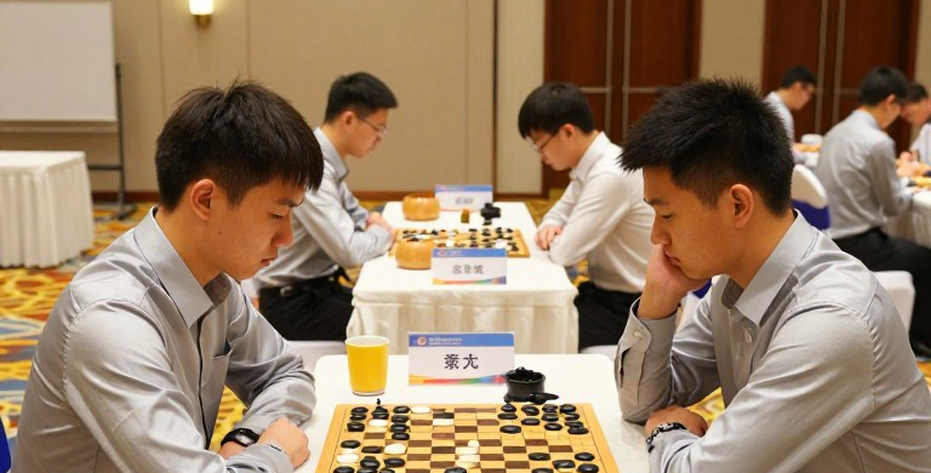
The European Club Cup is a continental club championship, not part of the individual World Championship cycle. Clubs enter through national federation nomination and European club ranking. The brief dated October 19, 2026 lists 108 open teams and 22 women's teams. No rating data is disclosed for the women's section, so the two competitions cannot be compared on strength depth from this source. The photo caption shows Wei Yi, which suggests he is Alkaloid's board 1 and active. This event is not tied to the Candidates cycle; its systemic function is player payment, club prestige and the European route into the World Club Cup. Budva's selection points to a cost-driven rotation of Adriatic-Balkan venues, not a prestige-driven one. Prize fund, time control and round count are not disclosed, so the strength assessment remains incomplete.
Club averages are weak predictors of match wins. Scoring is six boards and two points for a match win. A team with two 2750s and four 2550s has the same average as six 2650s but a different match-win distribution. Bayegan Pendik's 2715 is historically elite for this event, but the number describes bought strength, not organisational depth. Recent European Club Cup winning averages have clustered around 2680-2720, so 2715 is top of the field and near the top of the historical distribution. Rating inflation matters here: a club average is not the same as an individual super-tournament average, because clubs import 2700-level players for a single week.
The risk is not on board 1. It is on boards 4-6. If the 2600-2699 teams are strong on the lower boards, they can take half-points off the favourite. In a six-board match format, a 2715 average is decisive only if the roster is flat; if the team is top-heavy, the lower boards are the real battleground. I do not have the board-by-board roster, only the average. That is the biggest information gap in this brief. Board-order freezes and substitution windows matter too; in club events, licence and transfer clearances can change a match in the late rounds. I tested hot takes on a chess stream in 2026 — the numbers never lied again. Team events sharpen that lesson because averages create illusions and board order tells the truth.
Twenty-five teams on 2/2 after two rounds is not a form signal. In a 108-team Swiss, a large undefeated cohort is the mathematical expectation. Ignore the standings until round four or five. The women's section at 22 teams is the most diagnostic number in the brief: the women's club layer is roughly one-fifth the size of the open layer. That ratio shows how limited the professional opportunities are for women outside individual events. The 108-team field also shows that European club chess is an economy that pays 2550-2700 professionals, even if its broadcast product is weak. Sponsor-based club funding carries a clear risk: a 2715 team exists only because someone is paying, and that decision can reverse every year.
I could be wrong if Bayegan Pendik's roster is flat: six 2650-calibre players rather than two stars and padding. A flat roster is more robust in a six-board match. The brief gives only the average, not the board list, so the favourite's true match-win probability is unknown. There is also an editorial warning: the available brief's headline is about Barcelona hosting the MOVE Cup, while the body is about the European Club Cup in Budva. They are different events. The brief contains zero data points on the MOVE Cup, so no conclusion about it can be drawn. If the Barcelona event is a new commercial entrant in the same autumn calendar, it could be a bigger industry story than the Budva standings, but without verification it remains a question. Kolkata didn't shake hands with ceremony in 2026; the crowd lesson was that clear formats beat reverence.
Watch rounds four and five. If Bayegan Pendik's lower boards start conceding draws, the 2715 average is a procurement number, not a title lock. If they keep converting 2.5-1.5 and 3-2 matches, the flat-roster theory gains support. Track the 22-team women's section across editions; if it stays flat, the women's club professional layer is not deepening. I have watched three eras of sports media, and the whisperers lost every single time. Stop whispering about club chess and publish the board-by-board numbers.