
Galatasaray's Thirty-Minute Gamble: Where Okan Buruk's Derby Plan Lost Its Second Half
**मुख्य उत्तर (≤60 शब्द):** ओकान बुरुक की योजना के अनुसार गैलाटसराय सोमवार 26 अक्टूबर, 21:30 पर घर में फेनरबाह्चे के खिलाफ पहली सीटी से ऊंचा प्रेस लगाकर पहले तीस मिनट में गोल करने उतरेगा। यह जानकारी एकल स्रोत तकविम से है; कोई आधिकारिक हवाला नहीं है। गैलाटसराय आठ मैचों में 19 अंकों के साथ शीर्ष पर है, फेनरबाह्चे से तीन अंक आगे। **मुख्य तथ्य:** - सुपर लिग सप्ताह 9: गैलाटसराय बनाम फेनरबाह्चे, सोमवार 26 अक्टूबर, 21:30, गैलाटसराय का घरेलू मैदान। - तालिका: गैलाटसराय 8 मैच में 19 अंक, पहला स्थान, फेनरबाह्चे से +3 अंक। - 19 अंकों से निकला रिकॉर्ड: 6 जीत, 1 ड्रॉ, 1 हार — यानी एक हार दर्ज हो चुकी है। - योजना का संदर्भ बिंदु: लील के दूर के मैच का प्रेसिंग टेम्पलेट। - स्रोत में कोई खिलाड़ी नाम, फॉर्मेशन, प्रेस-ट्रिगर या आंकड़ा (PPDA/xG) नहीं है। **स्रोत:** तकविम (तुर्की मीडिया रिपोर्ट), प्रकाशन मैच से पहले; तारीख और वर्ष अपुष्ट — 26 अक्टूबर का सोमवार होना और 2022-23 से लागू "ट्रेंडयोल सुपर लिग" नाम एक-दूसरे से टकरा सकते हैं। **संबंधित प्रश्न-उत्तर:** प्रश्न: क्या घर में ऊंचा प्रेस गैलाटसराय के लिए जोखिम भरा है? उत्तर: तीन अंक की बढ़त के साथ हार से बढ़त शून्य हो जाती है और फेनरबाह्चे को हेड-टू-हेड बढ़त मिल जाती है, इसलिए अति-आक्रामक शुरुआत वैरिएंस बढ़ाती है। प्रश्न: फेनरबाह्चे इस प्रेस को कैसे बेअसर कर सकता है? उत्तर: गोलकीपर और सेंटर-बैक की लंबी गेंद या सीधा वर्टिकल बिल्ड-अप पहली लाइन को बायपास कर देता है, पर स्रोत में फेनरबाह्चे की बिल्ड-अप प्रोफाइल का जिक्र ही नहीं है। प्रश्न: इस योजना में युवा खिलाड़ियों का हिसाब कहां है? उत्तर: कहीं नहीं — योजना में एक भी खिलाड़ी का नाम नहीं है, इसलिए 23 वर्ष से कम उम्र के तुर्की खिलाड़ियों को मिलने वाले मिनट ही असली मापदंड हैं।
Thirty minutes. The most concrete detail to leak out of Galatasaray's derby plan is not a tactic at all — it is a deadline. The goal has to arrive inside the first half hour. Turkish outlet Takvim published eighteen points ahead of Monday night's Galatasaray–Fenerbahçe fixture. I read all eighteen twice and came away with four lines in my notebook. The other fourteen were the same sentence wearing different clothes: press high, force Fenerbahçe into mistakes in their own half, finish on the fast counter.
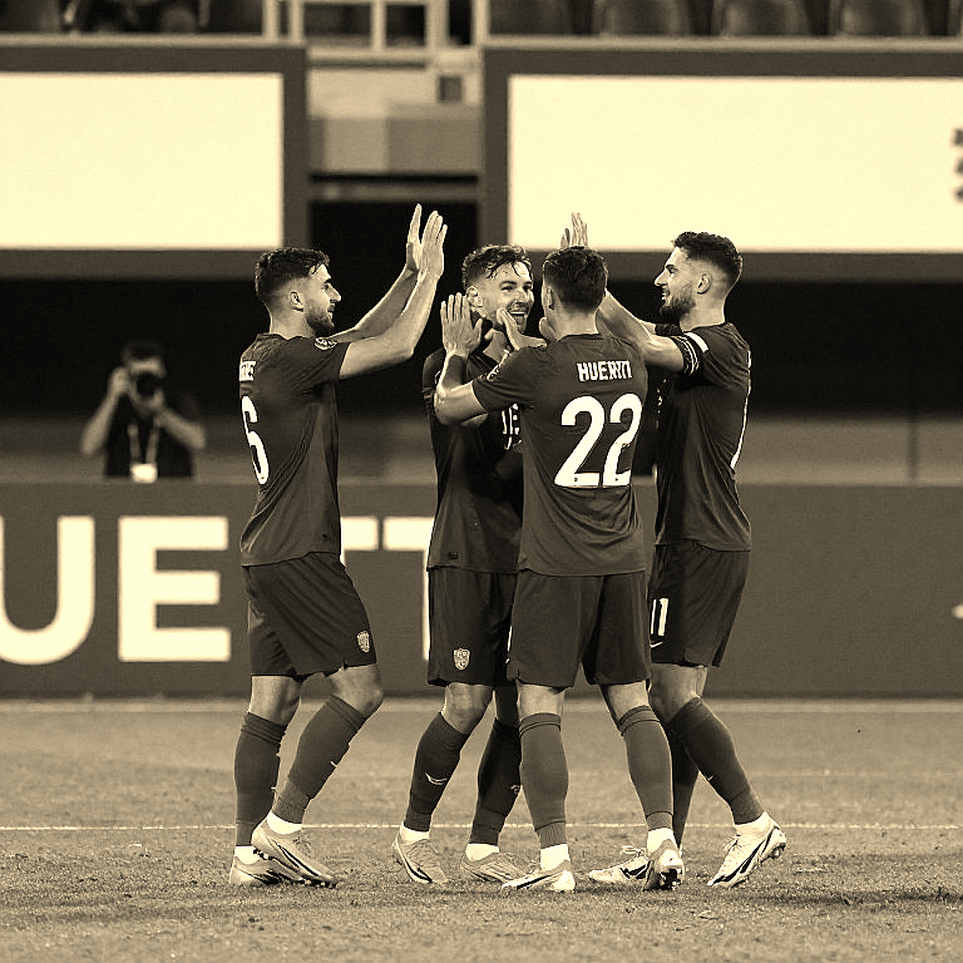
Four out of eighteen. That ratio tells you what kind of leak this is — not the inner game model of a coaching staff, but the press-release-shaped summary of a training session. When a paper prints that summary, my first question is never whether it is true. My first question is where the rest of it got cut.
The cut is visible here. Galatasaray did not build a plan to beat Fenerbahçe. They built a plan for the first thirty minutes. What happens at 0-0 in the thirty-fifth minute is not answered anywhere in those eighteen points.
I learned that reflex in Doha. In 2026 India lost all three Asian Cup group games — Australia, Bahrain (2-5), South Korea — and after that I stopped waiting for the press conference and started printing numbers first: goals conceded, competitive matches played before the tournament, days since the last national camp. The reason was simple. The official excuse always arrives first. Monday night needs the same treatment. The news of the tactical intent is already out; the table, the form and the risk arithmetic should be in the notebook before kick-off, so that nobody can claim afterwards that the plan changed suddenly.
What the ground actually looks like
Süper Lig, week nine. Galatasaray at home to Fenerbahçe, Monday 26 October, 21:30. Galatasaray sit first on 19 points from eight matches, three clear of Fenerbahçe.
Now the arithmetic nobody prints. Nineteen points from eight games permits exactly one integer combination: six wins, one draw, one defeat. Galatasaray have already lost a match this season. That crack matters, because the confidence built before a derby is usually built by hiding precisely that line.
A flag on the date. 26 October falls on a Monday only in certain years, and the "Trendyol Süper Lig" name applies from 2026-23 onward. The two anchors may not sit together, so the date should be treated as unconfirmed. This is not a small thing. A report that cannot verify its own date deserves the same caution on its training-ground detail.
Source quality? One outlet, no named journalist, not a single direct quote from Okan Buruk or any player, no formation, no personnel, no press triggers, no set-piece detail. Everything in it belongs to the category that can be published without any inside access at all.
The plan's four elements are these: high press from the first whistle; win the ball back in the opponent's half; score inside thirty minutes; finish through fast counters. The reference point given is the away pressing template from the Lille match. That is the entire brief.
Question one: what happens after thirty minutes
A thirty-minute plan does not have a second half. The eighteen points describe the opening phase repeatedly and then go quiet. No mid-block reset, no substitution timing, no tempo management. Teams that bet on a thirty-minute blitz need a pre-agreed drop-off structure, or the same energy that won the opening gets spent against them by the seventieth. One of two things is true here: either the second phase is genuinely missing from Buruk's preparation, or it is missing from the reporting. Both are reasons for concern, and they are not the same concern.
Question two: was the Lille template borrowed, or inverted
This is my strongest objection. Pressing high away at Lille was an underdog's risk-accepting strategy. Away from home, against a stronger or equal European side, the cost of the press being broken is small and the upside is large — an away goal, a stunned stadium, a foothold in the tie.
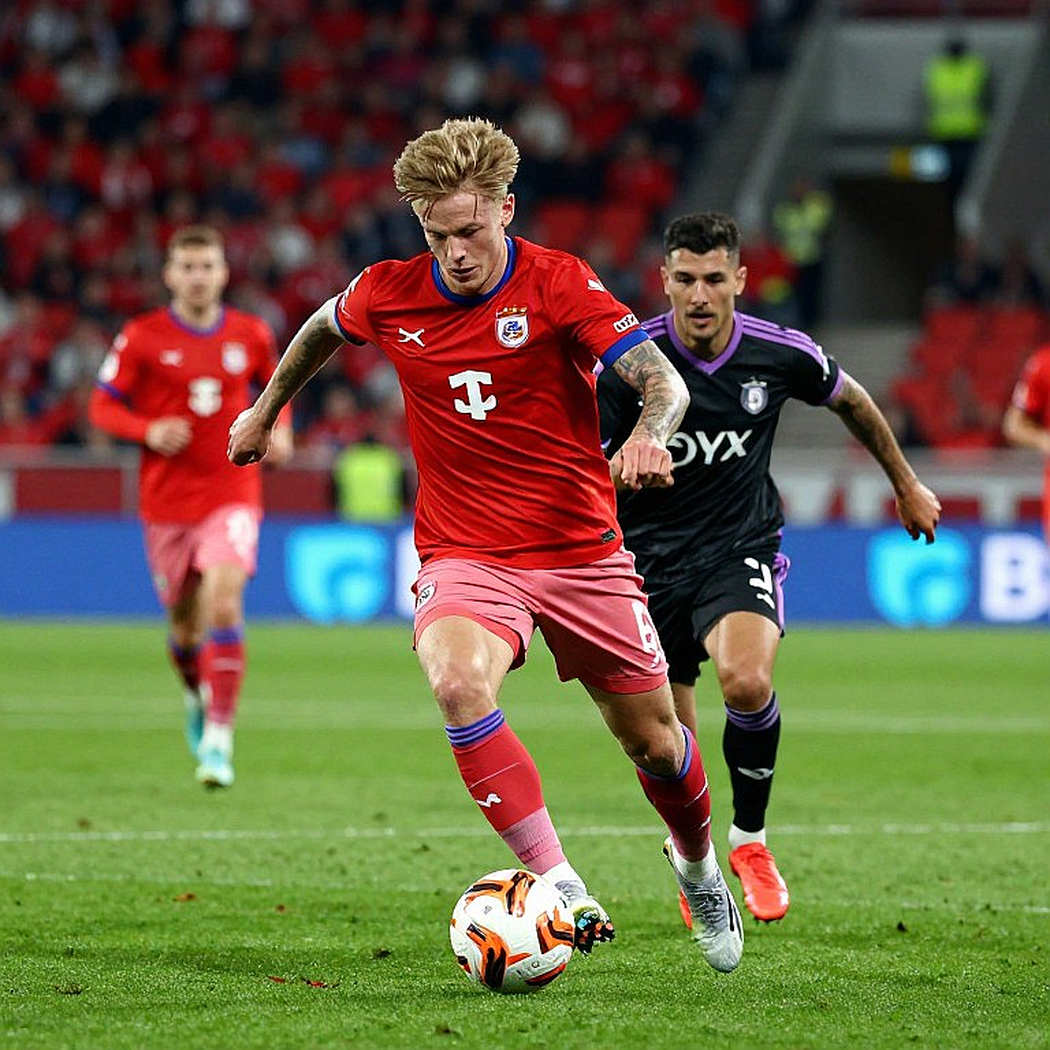
Pressing high at home, top of the table, with a three-point cushion, against your biggest rival is a risk-amplifying decision, not a risk-reducing one. The entire incentive structure flips. The underdog wants variance. The favourite wants control. Whether Buruk is consciously adapting the template or simply repeating it cannot be settled from this report — and that is the report's biggest failure.
Question three: "press the defence" is not a tactic
"Press the opponent's defence from the first whistle" and "force them into mistakes" are intentions, not tactics. Real pressing schemes specify triggers: a back-pass, a poor first touch, a centre-back receiving with his back to goal, a full-back taking the ball on his weaker foot. Not one trigger appears. Which means the plan as printed could describe anything from a coordinated 4-4-2 press to eleven men chasing individually. The gap between those two is the gap between a plan and a panic, and the reader is not given the tools to tell them apart.
Question four: where is Fenerbahçe in this story
Nowhere. Across eighteen points Fenerbahçe exist only as an object to be disrupted — never as a team with a build-up identity of their own. That is a serious reporting gap.
High pressing is lethal against sides that insist on playing out through a deep pivot; it is close to neutralised by a goalkeeper and centre-backs willing to go long to a physical target man, or by a direct, vertical opponent that bypasses the first line entirely. Which category Fenerbahçe belong to is not stated. If that omission is the reporter's, fine. If the same omission exists in the coaches' room, it is the most expensive one available before a derby.
Question five: the arithmetic of risk
With a three-point lead in week nine, the outcome distribution is asymmetric. Win — the lead goes to six, valuable but not decisive in October. Draw — the lead holds at three, entirely acceptable. Loss — the lead is gone and Fenerbahçe take the head-to-head and the psychological edge.
Two of three outcomes are fine for Galatasaray. In that position an ultra-aggressive opening deliberately widens the variance. That is defensible only if the squad-quality gap is very large, because in a low-scoring sport variance hurts the stronger side more than the weaker one. Buruk has not shown his working. The pragmatic route is obvious: a controlled, front-loaded press that reverts to a compact mid-block after twenty-five to thirty minutes captures most of the stated upside at a fraction of the tail risk.
Question six: the stands give energy on conditions, not on contract
I write from the stands, and I read the stands as data. There were 131,781 at Salt Lake in 2026; the Kolkata derby still draws sixty thousand plus. That crowd gives a team energy, and the same crowd runs out of patience on a schedule.
A home crowd's energy comes with conditions attached, not with a contract. The report says an early goal will lift the stands (points 15 and 18). The arrow flies both ways. A crowd promised an early goal becomes a liability if the goal has not arrived by minute thirty. Anxiety climbs off the terrace and onto the pitch, the press stops being collective and becomes individual, and the compact block that made the press work comes apart. The report treats the crowd as an asset. It is a conditional asset.
Question seven: where are the players in this plan
Not one player is named. No formation, no individual role, no mention of the age profile of the full-backs. A high press depends entirely on how young and how athletic the front line and the full-backs are, and that information is at zero here.
I have one instrument for this question, and it has been running since 2026. I watched Alessandro Del Piero's unveiling at Delhi from the press box — a 39-year-old marquee signing, bought for the poster. That season's final was settled by a 95th-minute goal from Mohammed Rafique, a 23-year-old local midfielder, the only man on that pitch nobody had marketed. My rule since then: judge every big move by what a local 23-year-old did in the same ninety minutes.
Applied here, the rule reads plainly: a plan with no player's name in it is a plan where nobody has counted the youth minutes. Derbies do not build careers; derby minutes do. I apply this rubric to minutes and structures, never to spectacle — so the question for Monday is how many Turkish players under 23 get on that pitch, not how magnificent the atmosphere will be.
Question eight: where is the money in this
There is no transfer, no contract and no fee anywhere in the report. I once promised a six-part investigation into franchise economics and delivered two parts, so I know how unglamorous it is to say that a hole is a hole. I will not manufacture a single financial figure about either club.
What can be said is structural. This plan is built out of coaching, not capital — which is both its real advantage and its real limit. It needs no new signing, only a different use of existing assets. Turkish clubs have historically carried a large share of liabilities in euros and dollars while earning in lira, and have favoured late-career, high-wage names with near-zero resale value. In that environment a pressing-and-transition identity is the cheapest route to overperformance relative to the wage bill.
There is a structural fragility alongside it. A league whose commercial value clusters around two or three fixtures has a thinner revenue base than one with distributed competitive depth. The derby is a revenue festival for the clubs, which is precisely why neither side can afford to let it go stale — and precisely why the league looks so dependent on it.
Where I could be wrong
Three places.
First, I am assuming the report is incomplete, when the plan may genuinely be this thin — in which case the criticism belongs to the coach, not the reporter, and I have aimed at the wrong man. That distinction matters to the reader.
Second, and more serious: the high press may itself be the control. If Fenerbahçe are a side forced to build through a deep pivot, breaking that build-up in the first half hour is not a risk, it is the cheapest way of avoiding risk — the ball stays in their half and your own goal faces fewer transitions. My entire risk arithmetic rests on the assumption that Fenerbahçe can go long and bypass the press. The report does not prove it and neither have I.
Third, week-nine points may matter less than I am giving them credit for. Winning an October derby decides the mood of a season, not the table — and mood has no xG. If Buruk has decided that six points are worth less than planting the idea in Fenerbahçe's head that they can be squeezed at home, his risk arithmetic is better than mine.
What I will be watching on Monday night
If it is 0-0 at minute 35 and the front three are still chasing alone, the plan had one act. If the team has dropped collectively into a mid-block by then, Buruk had a second act he never told the papers about. I am betting on the second, because a coach who spends thirty minutes of a home derby with a three-point cushion and does not write down the next page has not prepared a lesson for Fenerbahçe — he has prepared one for himself. And if the goal arrives in the third minute, remember this: the question will not be whether the plan worked. It will be how many 23-year-old Turks were in it.